Best interstate movers in Baltimore, MD
Beyond the statewide Maryland basics, Baltimore has its own housing stock, traffic patterns, and building logistics worth knowing before you book.
- Real customer reviews — never fabricated
- FMCSA registration data linked directly
- Free to use, no obligation
Get matched with Baltimore movers
Tell us about your move and we'll connect you with movers who serve your route. Free, no spam.
National interstate movers serving Baltimore
Every major national van line operates in the Baltimore area. Ranked here by real Google rating:



Get quotes for your Baltimore move
Tell us your route and home size — free, no obligation.
Typical interstate moving cost in Baltimore by home size
| Home size | Short-distance | Medium-distance | Long-distance |
|---|---|---|---|
| Studio / 1 bedroom | $1,600–$2,800 | $1,900–$3,400 | $2,200–$4,000 |
| 2 bedroom | $2,500–$4,200 | $3,000–$5,200 | $3,500–$6,200 |
| 3 bedroom | $3,600–$5,800 | $4,300–$7,200 | $5,000–$8,500 |
| 4+ bedroom | $5,200–$8,000 | $6,500–$10,000 | $7,500–$12,000+ |
See our Baltimore moving cost calculator for the full home-size × distance breakdown, or the general moving cost calculator for any origin.
Popular interstate moving routes to and from Baltimore
Each corridor below has its own dedicated page with typical cost, transit time, and what to plan for on that specific route — pulled from the same underlying route data used across this site, not a separate estimate.
| Route | Distance |
|---|---|
| New York City to Baltimore | ~185 miles |
New York City to Baltimore
Why people make this move: Strong government, healthcare, and biotech job market near Washington, DC and Baltimore
Worth knowing: Maryland's DC-suburb counties (Montgomery, Prince George's) have a cost of living much closer to New York than the rest of the state
Maryland's climate is broadly similar to New York's, with slightly milder winters — a modest adjustment at most on this corridor.
Full New York City–Baltimore route breakdown →What's specific to moving to Baltimore
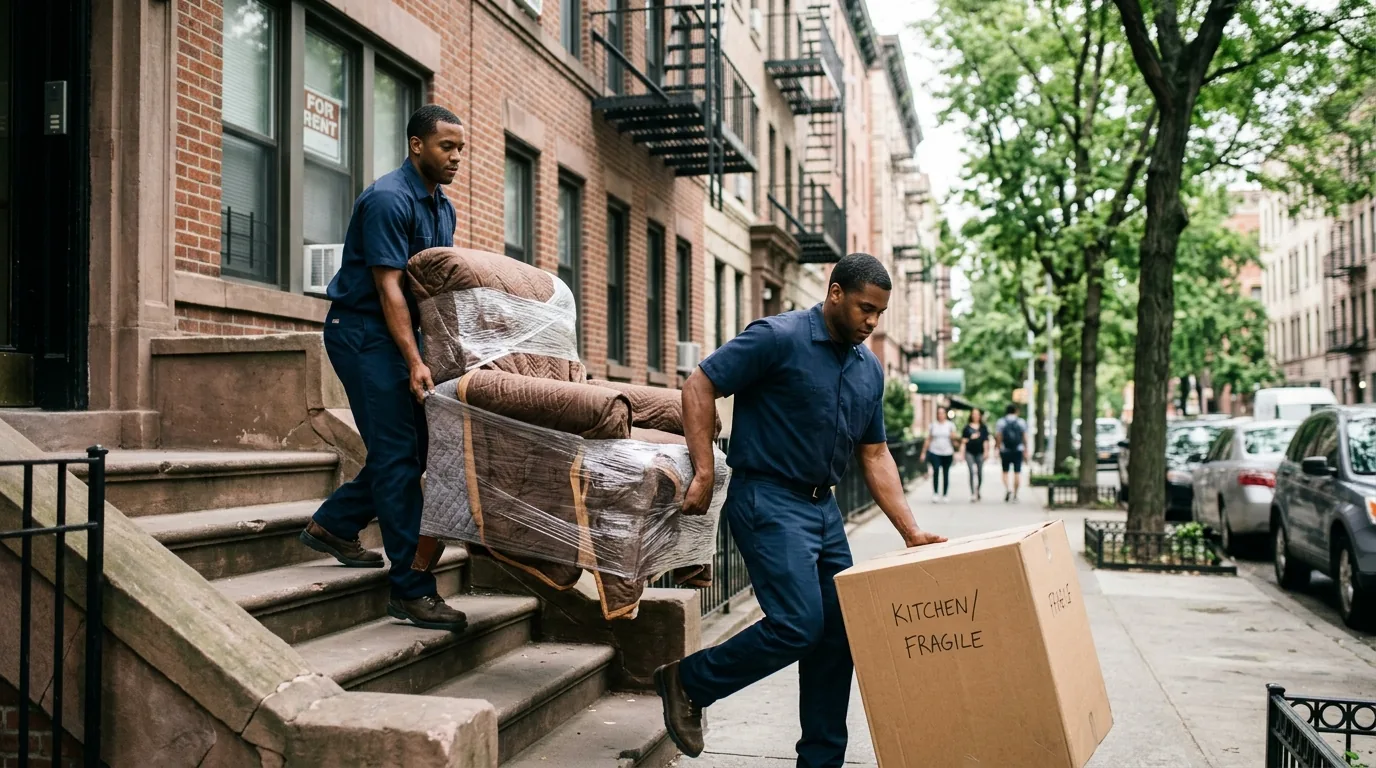
Narrow streets, some still cobblestone in historic neighborhoods like Fells Point, complicate truck parking — a street parking permit is often required, so check with the city or your mover ahead of time. The uneven cobblestone surfaces also make hand-truck and dolly work slower and more physically demanding, increasing both labor time and the risk of item damage if not properly padded. Rowhouse stairwells are often steep and narrow, worth flagging to your mover for any oversized furniture, as pieces that cannot pivot on landings may need hoisting through upper windows or disassembly on the sidewalk. These constraints compound on moving day, so a walkthrough with your crew lead before the truck arrives can prevent costly mid-move surprises.
Specialty moving services for Baltimore
Piano moving in Baltimore
Piano moving is one of the more commonly requested specialty services for interstate movers in Baltimore. Given the city's narrow rowhouse stairwells and tight turns in historic neighborhoods, moving a piano requires particular care and equipment. The steep, narrow stairwells common in Baltimore's classic brick and formstone rowhouses make this especially challenging. If you are planning an interstate move to or from the city and own a piano, you will want to discuss the specific layout of your home with your mover well in advance. See our full piano moving guide for more details on what to expect. See our full guide →
Hot tub moving in Baltimore
Hot tub moving is one of the more commonly requested specialty services for interstate movers in Baltimore. Whether you are relocating from a suburban property in Towson or Columbia with easier truck access, or from a tighter city location where narrow streets and cobblestone roads complicate parking, moving a hot tub across state lines involves significant logistics. The need for street parking permits in many Baltimore neighborhoods adds another layer of planning. Be sure to coordinate with your mover about access and permitting early in the process. Our hot tub moving guide covers everything you need to prepare. See our full guide →
Pool table moving in Baltimore
Pool table moving is one of the more commonly requested specialty services for interstate movers in Baltimore. These heavy, delicate items are difficult to maneuver through the steep and narrow stairwells typical of the city's rowhouses, and disassembly is often necessary. Even in suburban areas with more traditional single-family housing and easier truck access, the sheer weight and precision required for safe transport makes this a job for specialists. Talk to your interstate mover about their experience with pool tables and the specific challenges of your Baltimore property. Check out our complete pool table moving guide to learn more. See our full guide →
Popular Baltimore neighborhoods for interstate relocators
Alternatives to a full-service Baltimore mover
For moves under 500 miles, the cost gap between full-service and DIY options narrows enough that it is worth comparing both approaches before deciding. Shorter distances mean less fuel, fewer overnight stays for crews, and lower overall mileage charges, which brings professional mover estimates down closer to what you might spend renting a truck and handling everything yourself. That said, the DIY route still has hidden costs that are easy to overlook at first glance. You will need to factor in truck rental, fuel, mileage fees, packing supplies, equipment rentals for heavy items, and the value of your own time spent loading, driving, and unloading. Depending on your schedule and physical ability, a full-service company handling the labor might justify a slightly higher price tag, especially if you are moving on a tight timeline or have bulky furniture to navigate through stairs or narrow doorways. The best move is to get at least two quotes from full-service movers and run your own detailed cost estimate for a rental truck before assuming the DIY path saves money for a move to or from Baltimore specifically.
Still deciding on a mover?
Compare real reviews for movers serving Baltimore, or get free quotes now.
Frequently asked questions
For a typical 2–3 bedroom home moving 1,000+ miles, expect roughly $5,000–$8,500 with a full-service mover. Shorter regional moves cost meaningfully less. Use our moving cost calculator for a number specific to your exact origin and home size.
Baltimore's city core is dominated by classic rowhouses — narrow, attached brick and formstone homes — similar in character to Philadelphia, a genuinely different logistics challenge than standalone single-family housing. These homes typically share party walls with neighbors on both sides, which means movers cannot stage items in side yards and must work entirely from the front facade. The narrow lot widths, often twenty feet or less, leave minimal buffer between the sidewalk and the building, so every piece of furniture must be measured against doorways and stairwells before arrival. Suburban areas outside the city core (Towson, Columbia) offer more traditional single-family housing with easier truck access, with driveways that allow loading directly from the vehicle and no shared structural constraints to navigate.
Downtown and inner-harbor traffic can be heavy during commute hours — a weekday off-peak move is generally easier to coordinate for a rowhouse-neighborhood address. Morning and evening rush periods can turn short local trips into prolonged idling, which matters when metered street parking for the moving truck is time-restricted. Baltimore's proximity to Washington, DC also means some regional commuter traffic overlaps with local congestion patterns, particularly on corridors carrying federal workers between the two cities, so even mid-morning timing should account for spillover delays that extend beyond typical rush boundaries.
Fells Point, Federal Hill, Canton, Suburbs are among the most commonly mentioned — each has different logistics, so ask your mover about experience with your specific area.
4-8 weeks ahead for most of the year, 8-12 weeks ahead if moving during peak season (May-August). Popular destination cities can book up faster than less in-demand markets.