Best interstate movers in Philadelphia, PA
Beyond the statewide Pennsylvania basics, Philadelphia has its own housing stock, traffic patterns, and building logistics worth knowing before you book.
- Real customer reviews — never fabricated
- FMCSA registration data linked directly
- Free to use, no obligation
Get matched with Philadelphia movers
Tell us about your move and we'll connect you with movers who serve your route. Free, no spam.
National interstate movers serving Philadelphia
Every major national van line operates in the Philadelphia area. Ranked here by real Google rating:



Get quotes for your Philadelphia move
Tell us your route and home size — free, no obligation.
Typical interstate moving cost in Philadelphia by home size
| Home size | Short-distance | Medium-distance | Long-distance |
|---|---|---|---|
| Studio / 1 bedroom | $1,600–$2,800 | $1,900–$3,400 | $2,200–$4,000 |
| 2 bedroom | $2,500–$4,200 | $3,000–$5,200 | $3,500–$6,200 |
| 3 bedroom | $3,600–$5,800 | $4,300–$7,200 | $5,000–$8,500 |
| 4+ bedroom | $5,200–$8,000 | $6,500–$10,000 | $7,500–$12,000+ |
See our Philadelphia moving cost calculator for the full home-size × distance breakdown, or the general moving cost calculator for any origin.
Popular interstate moving routes to and from Philadelphia
Each corridor below has its own dedicated page with typical cost, transit time, and what to plan for on that specific route — pulled from the same underlying route data used across this site, not a separate estimate.
| Route | Distance |
|---|---|
| New York City to Philadelphia | ~95 miles |
New York City to Philadelphia
Why people make this move: Significantly lower cost of living and housing costs than New York
Worth knowing: At under 400 miles for most pairings, this corridor is short enough that DIY and container options are often genuinely price-competitive with full-service movers
Pennsylvania's climate is broadly similar to New York's — four real seasons, cold winters — so this move involves less climate adjustment than most other corridors on this list.
Full New York City–Philadelphia route breakdown →What's specific to moving to Philadelphia
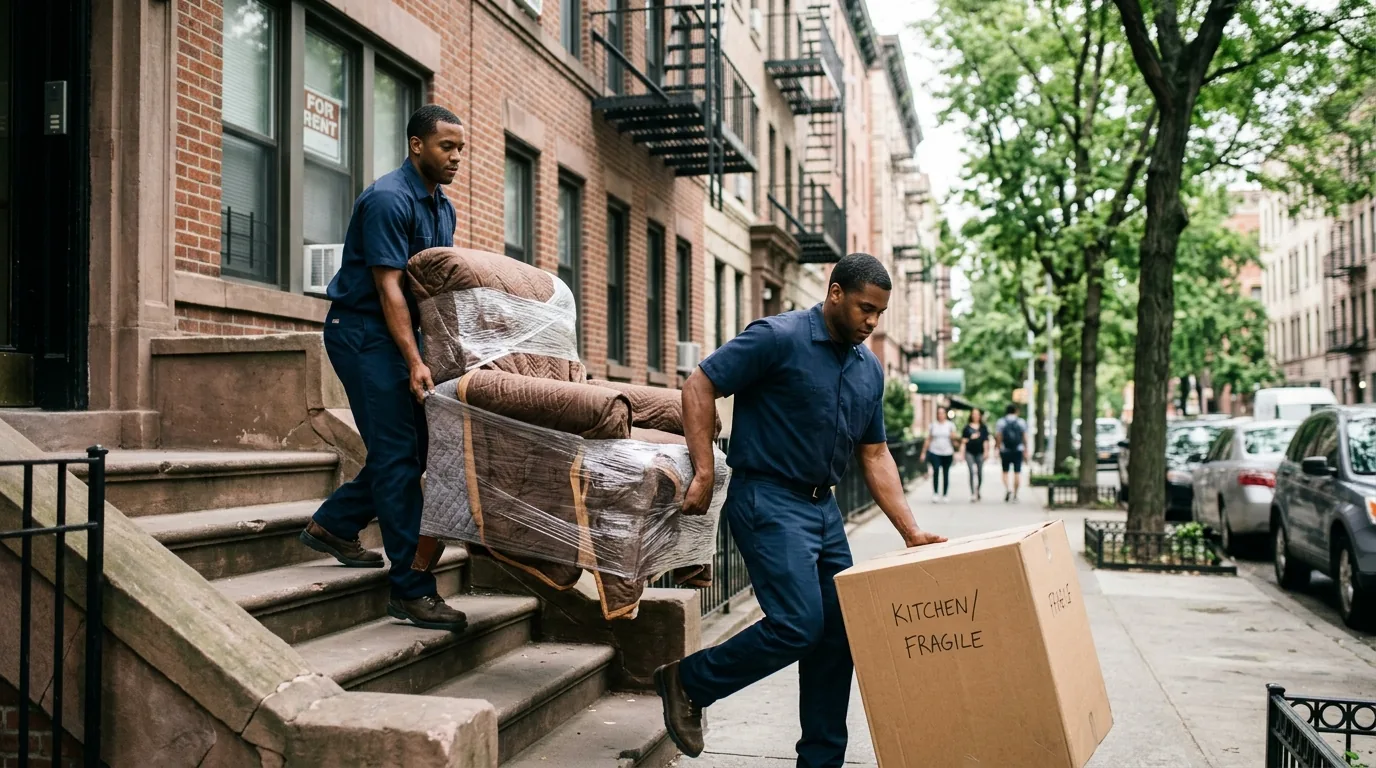
Narrow rowhouse stairwells complicate moving large furniture, and many blocks require a street parking permit for a moving truck — check with the city or your mover about permit requirements ahead of time, especially in Center City or Old City. The tight turns and steep steps common to these older buildings often mean sofas, mattresses, and dressers need to be hoisted through windows or disassembled in ways that add labor hours to your estimate. Parking permits are not automatic; they must be secured in advance and posted properly to reserve curb space, and without them your truck may be forced to circle or park illegally, risking tickets or towing. Ask whether your mover handles permit applications themselves or expects you to manage that process, and confirm whether the quoted rate includes any hoisting equipment or extra crew needed for difficult entries.
Specialty moving services for Philadelphia
Piano moving in Philadelphia
Piano moving is one of the more commonly requested specialty services for interstate movers in Philadelphia. The city's classic rowhouses, with their narrow attached layouts and tight stairwells, make transporting large instruments especially difficult. Many blocks also require a street parking permit for a moving truck, which adds another layer of planning for bulky items. Working with movers who understand these constraints can save significant hassle. See our full piano moving guide for tips on preparing your instrument. See our full guide →
Hot tub moving in Philadelphia
Hot tub moving is one of the more commonly requested specialty services for interstate movers in Philadelphia. The city's narrow rowhouse streets and attached homes create real obstacles for maneuvering oversized items, and tight stairwells often rule out standard moving approaches. Securing a street parking permit for the moving truck adds necessary lead time in neighborhoods like Center City or Old City. Specialized equipment and advance coordination become essential. See our full hot tub moving guide to plan your relocation. See our full guide →
Appliance moving in Philadelphia
Appliance moving is one of the more commonly requested specialty services for interstate movers in Philadelphia. The city's defining rowhouse stock means narrow doorways and stairwells that complicate getting refrigerators, washers, and dryers in and out of attached homes. Truck parking permits are frequently required on narrow blocks, making timing and logistics critical. Experienced movers can navigate these constraints without damaging your appliances or the property. See our full appliance moving guide for preparation steps. See our full guide →
Popular Philadelphia neighborhoods for interstate relocators
Alternatives to a full-service Philadelphia mover
For moves under 500 miles, the cost gap between full-service and DIY options narrows enough that it is worth comparing both approaches before deciding. Shorter distances mean less fuel, fewer overnight stays for crews, and lower overall mileage charges, which brings professional mover estimates down closer to what you might spend renting a truck and handling everything yourself. That said, the DIY route still has hidden costs that are easy to overlook at first glance. You will need to factor in truck rental, fuel, mileage fees, packing supplies, equipment rentals for heavy items, and the value of your own time spent loading, driving, and unloading. Depending on your schedule and physical ability, a full-service company handling the labor might justify a slightly higher price tag, especially if you are moving on a tight timeline or have bulky furniture to navigate through stairs or narrow doorways. The best move is to get at least two quotes from full-service movers and run your own detailed cost estimate for a rental truck before assuming the DIY path saves money for a move to or from Philadelphia specifically.
Still deciding on a mover?
Compare real reviews for movers serving Philadelphia, or get free quotes now.
Frequently asked questions
For a typical 2–3 bedroom home moving 1,000+ miles, expect roughly $5,000–$8,500 with a full-service mover. Shorter regional moves cost meaningfully less. Use our moving cost calculator for a number specific to your exact origin and home size.
Philadelphia's housing is dominated by classic rowhouses — narrow, attached homes on narrow streets — which is a genuinely different moving logistics challenge than a city with more standalone single-family housing. These tightly packed structures mean movers often cannot park directly adjacent to the front door, forcing longer carry distances through sidewalks that may be interrupted by stoops, basement entrances, or planted tree pits. The shared party walls also mean sound and vibration travel easily, so early morning or late evening moves may draw complaints from neighbors. Without driveways, garages, or side yards for staging, crews must work sequentially rather than spreading out, and weather becomes a bigger factor since there is no covered loading zone.
Center City's narrow, one-way street grid can slow a moving truck's access — ask your mover about their experience with Philadelphia's specific street layout. The alternating directions and frequent intersections mean large vehicles cannot simply reroute efficiently if a street is blocked by construction, a delivery, or a parked car, so timing the move to avoid peak traffic becomes more critical. Drivers unfamiliar with the pattern may miss turns and face lengthy loops to correct course, burning billable hours. A crew that knows which approaches work best for different blocks, and which times of day offer the clearest paths, can shave significant time off your move and reduce the risk of damage from tight squeezes or repeated maneuvering.
Center City, Fishtown, University City, South Philly are among the most commonly mentioned — each has different logistics, so ask your mover about experience with your specific area.
4-8 weeks ahead for most of the year, 8-12 weeks ahead if moving during peak season (May-August). Popular destination cities can book up faster than less in-demand markets.