Best interstate movers in Portland, ME
Beyond the statewide Maine basics, Portland has its own housing stock, traffic patterns, and building logistics worth knowing before you book.
- Real customer reviews — never fabricated
- FMCSA registration data linked directly
- Free to use, no obligation
Get matched with Portland movers
Tell us about your move and we'll connect you with movers who serve your route. Free, no spam.
National interstate movers serving Portland
Every major national van line operates in the Portland area. Ranked here by real Google rating:



Get quotes for your Portland move
Tell us your route and home size — free, no obligation.
Typical interstate moving cost in Portland by home size
| Home size | Short-distance | Medium-distance | Long-distance |
|---|---|---|---|
| Studio / 1 bedroom | $1,600–$2,800 | $1,900–$3,400 | $2,200–$4,000 |
| 2 bedroom | $2,500–$4,200 | $3,000–$5,200 | $3,500–$6,200 |
| 3 bedroom | $3,600–$5,800 | $4,300–$7,200 | $5,000–$8,500 |
| 4+ bedroom | $5,200–$8,000 | $6,500–$10,000 | $7,500–$12,000+ |
See our Portland moving cost calculator for the full home-size × distance breakdown, or the general moving cost calculator for any origin.
Popular interstate moving routes to and from Portland
Each corridor below has its own dedicated page with typical cost, transit time, and what to plan for on that specific route — pulled from the same underlying route data used across this site, not a separate estimate.
| Route | Distance |
|---|---|
| San Francisco to Portland | ~635 miles |
| Boston to Portland | ~105 miles |
San Francisco to Portland
Why people make this move: Lower housing costs than most of California, particularly the Bay Area
Worth knowing: This corridor runs mostly along I-5 — a relatively straightforward drive with fewer mountain-pass concerns than routes further east
Oregon (especially Portland and the Willamette Valley) sees far more rain than most of California — mild temperatures year-round, but persistently gray and wet outside summer.
Full San Francisco–Portland route breakdown →Boston to Portland
Why people make this move: Lower housing costs than metro Boston, especially outside Portland itself
Worth knowing: At just over 100 miles, DIY truck rental and moving containers are often the most cost-competitive choice on this corridor
Maine has a colder winter than Boston, particularly further inland or north, with a shorter summer — a real if moderate adjustment.
Full Boston–Portland route breakdown →What's specific to moving to Portland
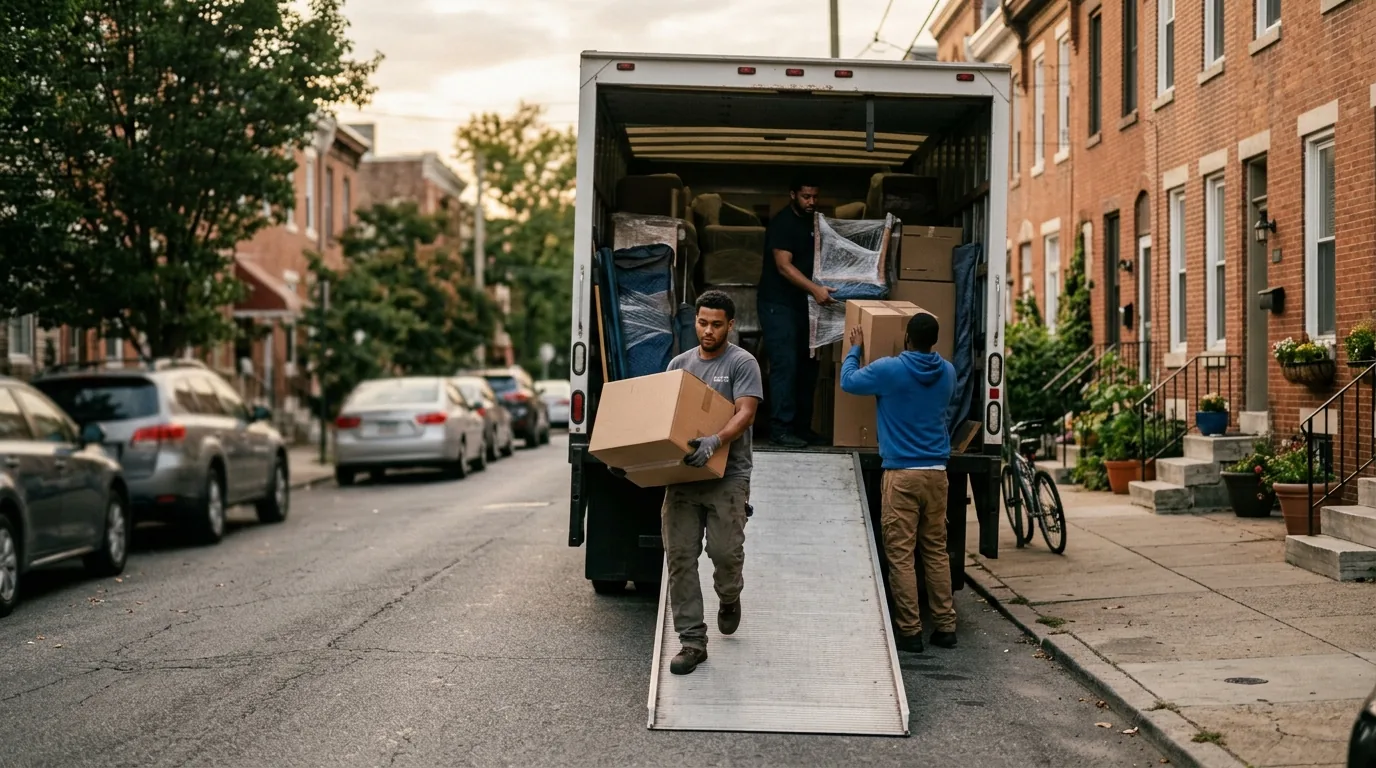
The Old Port's narrow, historic streets can complicate truck access, similar in character (at a smaller scale) to Boston's historic neighborhoods — confirm your mover's experience with the specific area. Cobblestone surfaces and sharp corners demand drivers accustomed to tight maneuvering, not just standard suburban route experience. Ask whether your crew plans to use a smaller shuttle truck for the final approach or if their main vehicle can navigate directly to your door. Loading zones, where they exist, tend to be brief and shared with delivery traffic, so building flexibility into your timeline prevents cascading delays. A mover who knows the area will also anticipate which blocks require creative parking solutions and can stage accordingly.
Specialty moving services for Portland
Piano moving in Portland
Piano moving is one of the more commonly requested specialty services for interstate movers in Portland. Given the city's mix of historic Victorian homes in the West End and newer condos in the Old Port, getting a piano into or out of these spaces requires careful planning. The Old Port's narrow, historic streets can complicate truck access, so confirming your mover's experience with this specific area matters even more for oversized instruments. See our full piano moving guide for tips on preparing your instrument. See our full guide →
Hot tub moving in Portland
Hot tub moving is one of the more commonly requested specialty services for interstate movers in Portland. With the city's rising popularity among Boston-area movers pushing housing costs up, many relocating residents want to bring their existing hot tubs rather than buy new. The Old Port's narrow, historic streets can complicate truck access for bulky items, making experienced movers essential. See our full hot tub moving guide to plan your relocation. See our full guide →
Antique and fine art moving in Portland
Antique and fine art moving is one of the more commonly requested specialty services for interstate movers in Portland. The city's historic Victorian homes in the West End often contain valuable period pieces, while the influx of Boston-area movers has brought more collectors to the area. The Old Port's narrow, historic streets can complicate truck access, so working with movers familiar with these logistics helps protect fragile items. See our full antique and fine art moving guide for preparation advice. See our full guide →
Popular Portland neighborhoods for interstate relocators

Alternatives to a full-service Portland mover
For moves under 500 miles, the cost gap between full-service and DIY options narrows enough that it is worth comparing both approaches before deciding. Shorter distances mean less fuel, fewer overnight stays for crews, and lower overall mileage charges, which brings professional mover estimates down closer to what you might spend renting a truck and handling everything yourself. That said, the DIY route still has hidden costs that are easy to overlook at first glance. You will need to factor in truck rental, fuel, mileage fees, packing supplies, equipment rentals for heavy items, and the value of your own time spent loading, driving, and unloading. Depending on your schedule and physical ability, a full-service company handling the labor might justify a slightly higher price tag, especially if you are moving on a tight timeline or have bulky furniture to navigate through stairs or narrow doorways. The best move is to get at least two quotes from full-service movers and run your own detailed cost estimate for a rental truck before assuming the DIY path saves money for a move to or from Portland specifically.
Still deciding on a mover?
Compare real reviews for movers serving Portland, or get free quotes now.
Frequently asked questions
For a typical 2–3 bedroom home moving 1,000+ miles, expect roughly $5,000–$8,500 with a full-service mover. Shorter regional moves cost meaningfully less. Use our moving cost calculator for a number specific to your exact origin and home size.
Portland, Maine mixes historic Victorian homes in the West End with newer condo development in the Old Port — the city's rising popularity with Boston-area movers has pushed housing costs up notably in recent years. That influx means inventory moves quickly, so securing housing before your move date matters more than it once did. Victorian properties often feature original staircases with tight turns, which affects how movers route large furniture and whether disassembly becomes necessary. Newer condos may offer elevators, but smaller freight units or limited reservation windows can create bottlenecks on moving day. Budget-conscious newcomers increasingly look slightly inland where their money stretches further, though that adds commute time back toward the peninsula.
Traffic is generally light by major-metro standards, though summer tourist season brings real congestion to the Old Port and waterfront areas specifically. Cruise ship arrivals and festival weekends can transform manageable streets into slow-moving corridors without warning, so scheduling your move outside peak visitor months saves significant hassle. Even within summer, early morning slots typically encounter fewer delays than midday or late afternoon when day-trippers and dining traffic overlap. Waterfront routes that seem straightforward on a map can back up unpredictably when parking demand surges, making buffer time essential for any truck-dependent schedule. Local knowledge of alternative approaches becomes genuinely valuable when the main arteries clog.
Downtown/Old Port, West End, Suburbs are among the most commonly mentioned — each has different logistics, so ask your mover about experience with your specific area.
4-8 weeks ahead for most of the year, 8-12 weeks ahead if moving during peak season (May-August). Popular destination cities can book up faster than less in-demand markets.