Best interstate movers in Boston, MA
Beyond the statewide Massachusetts basics, Boston has its own housing stock, traffic patterns, and building logistics worth knowing before you book.
- Real customer reviews — never fabricated
- FMCSA registration data linked directly
- Free to use, no obligation
Get matched with Boston movers
Tell us about your move and we'll connect you with movers who serve your route. Free, no spam.
National interstate movers serving Boston
Every major national van line operates in the Boston area. Ranked here by real Google rating:



Get quotes for your Boston move
Tell us your route and home size — free, no obligation.
Typical interstate moving cost in Boston by home size
| Home size | Short-distance | Medium-distance | Long-distance |
|---|---|---|---|
| Studio / 1 bedroom | $1,600–$2,800 | $1,900–$3,400 | $2,200–$4,000 |
| 2 bedroom | $2,500–$4,200 | $3,000–$5,200 | $3,500–$6,200 |
| 3 bedroom | $3,600–$5,800 | $4,300–$7,200 | $5,000–$8,500 |
| 4+ bedroom | $5,200–$8,000 | $6,500–$10,000 | $7,500–$12,000+ |
See our Boston moving cost calculator for the full home-size × distance breakdown, or the general moving cost calculator for any origin.
Popular interstate moving routes to and from Boston
Each corridor below has its own dedicated page with typical cost, transit time, and what to plan for on that specific route — pulled from the same underlying route data used across this site, not a separate estimate.
| Route | Distance |
|---|---|
| Boston to Miami | ~1,500 miles |
| Boston to Manchester | ~55 miles |
| Boston to Providence | ~50 miles |
| Boston to Burlington | ~215 miles |
| Boston to Portland | ~105 miles |
Boston to Miami
Why people make this move: No state income tax in Florida, unlike Massachusetts
Worth knowing: Winter moves out of Boston add weather-related planning — confirm your mover's cold-weather procedures and have a backup date in mind
Florida's hot, humid summers and hurricane season (June–November) are a major shift from Massachusetts winters — the trade-off most movers on this corridor are explicitly making.
Full Boston–Miami route breakdown →Boston to Manchester
Why people make this move: No state income tax in New Hampshire, unlike Massachusetts
Worth knowing: At under 60 miles for many pairings, this is one of the shortest corridors on this list — DIY truck rental and moving containers are often the most cost-competitive choice
Massachusetts and New Hampshire share a nearly identical New England climate — cold winters, warm summers — essentially no climate adjustment on this corridor.
Full Boston–Manchester route breakdown →Boston to Providence
Why people make this move: Lower housing costs than metro Boston
Worth knowing: At around 50 miles, this is one of the shortest corridors on this list — DIY truck rental and moving containers are almost always the most cost-competitive choice at this distance
Massachusetts and Rhode Island share a nearly identical New England coastal climate — essentially no climate adjustment on this corridor.
Full Boston–Providence route breakdown →Boston to Burlington
Why people make this move: Lower housing costs than metro Boston, especially outside Burlington itself
Worth knowing: This corridor runs at a moderate distance where DIY and container options are often price-competitive with full-service movers
Vermont has a colder, snowier winter than Boston, with a shorter and cooler summer — a real adjustment, particularly for anyone moving outside the Burlington area.
Full Boston–Burlington route breakdown →Boston to Portland
Why people make this move: Lower housing costs than metro Boston, especially outside Portland itself
Worth knowing: At just over 100 miles, DIY truck rental and moving containers are often the most cost-competitive choice on this corridor
Maine has a colder winter than Boston, particularly further inland or north, with a shorter summer — a real if moderate adjustment.
Full Boston–Portland route breakdown →What's specific to moving to Boston
September 1 is famously "moving day" across Boston and Cambridge, tied to the region's common September 1 lease start/end date — demand and pricing spike heavily around this date specifically, so avoid it if your schedule allows any flexibility. On this single day, tens of thousands of residents attempt simultaneous moves, creating a perfect storm of booked-solid crews, inflated hourly rates, and scarce rental truck availability that can extend for the surrounding week. Streets become impassable with double-parked vehicles and discarded furniture, and even simple tasks like elevator reservations or loading dock access require far more advance coordination. Shifting your move even one week earlier or later typically yields significant savings and a calmer experience with more attentive service from your crew.
Specialty moving services for Boston
Piano moving in Boston
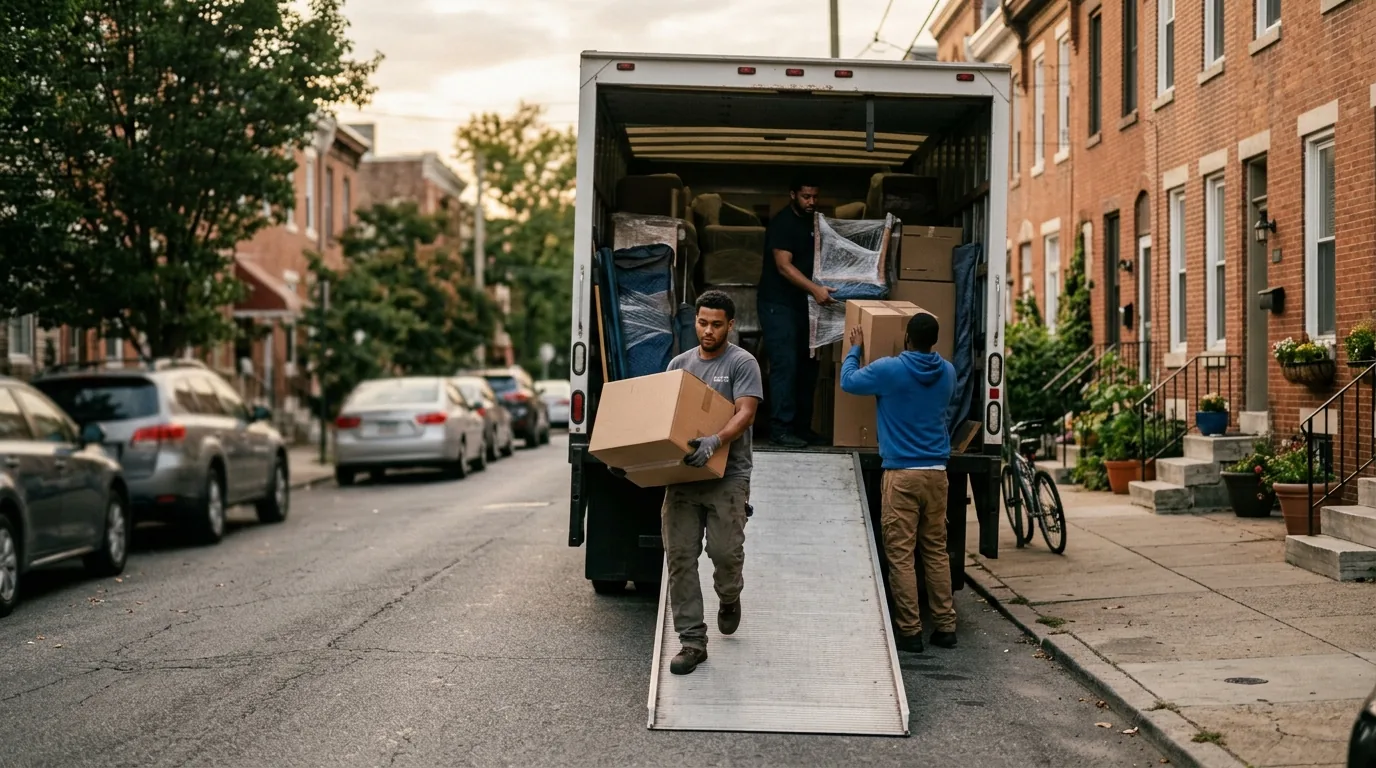
Piano moving is one of the more commonly requested specialty services for interstate movers in Boston. The city's historic brick rowhouses and triple-deckers, combined with narrow streets and limited parking, create genuinely different moving logistics than newer cities with wide roads and driveways. A piano move into or out of these tight spaces requires experienced crews who understand how to navigate tight turns and staircases. See our full piano moving guide for tips on preparing your instrument and choosing the right team. See our full guide →
Pool table moving in Boston
Pool table moving is one of the more commonly requested specialty services for interstate movers in Boston. The city's historic brick rowhouses and triple-deckers, combined with narrow streets and limited parking, create genuinely different moving logistics than newer cities with wide roads and driveways. A pool table's weight and slate construction make it especially challenging to maneuver through tight entryways and up narrow stairs common in Boston's older housing stock. See our full pool table moving guide for what to expect during disassembly, transport, and reassembly. See our full guide →
Appliance moving in Boston
Appliance moving is one of the more commonly requested specialty services for interstate movers in Boston. The city's historic brick rowhouses and triple-deckers, combined with narrow streets and limited parking, create genuinely different moving logistics than newer cities with wide roads and driveways. Large appliances often need to be carried through narrow passages or hoisted in creative ways, making professional handling particularly valuable. See our full appliance moving guide for how to protect your items and coordinate delivery timing. See our full guide →
Popular Boston neighborhoods for interstate relocators

Alternatives to a full-service Boston mover
For moves under 500 miles, the cost gap between full-service and DIY options narrows enough that it is worth comparing both approaches before deciding. Shorter distances mean less fuel, fewer overnight stays for crews, and lower overall mileage charges, which brings professional mover estimates down closer to what you might spend renting a truck and handling everything yourself. That said, the DIY route still has hidden costs that are easy to overlook at first glance. You will need to factor in truck rental, fuel, mileage fees, packing supplies, equipment rentals for heavy items, and the value of your own time spent loading, driving, and unloading. Depending on your schedule and physical ability, a full-service company handling the labor might justify a slightly higher price tag, especially if you are moving on a tight timeline or have bulky furniture to navigate through stairs or narrow doorways. The best move is to get at least two quotes from full-service movers and run your own detailed cost estimate for a rental truck before assuming the DIY path saves money for a move to or from Boston specifically.
Still deciding on a mover?
Compare real reviews for movers serving Boston, or get free quotes now.
Frequently asked questions
For a typical 2–3 bedroom home moving 1,000+ miles, expect roughly $5,000–$8,500 with a full-service mover. Shorter regional moves cost meaningfully less. Use our moving cost calculator for a number specific to your exact origin and home size.
Much of Boston's core housing stock is historic brick rowhouses and triple-deckers with narrow streets and limited parking — genuinely different moving logistics than a newer Sun Belt city with wide roads and driveways. These older buildings often have tight staircases, small doorways, and no freight elevators, so crews may need to hoist furniture through windows or disassemble larger pieces on the spot. Walk-up units are common, and even where elevators exist they tend to be older and smaller than modern standards, which slows the load-in process. Movers familiar with this housing type bring specialized equipment like furniture straps, compact dollies, and protective materials suited to tight quarters and delicate historic finishes.
Boston's narrow, historic street layout and limited parking make truck access a real planning factor — ask your mover about parking permits for your specific street, especially in Back Bay or the South End. A standard moving truck needs substantial curb space for safe loading, and without reserved parking your crew may be forced to double-park or stage blocks away, adding time and risk to the job. Many central neighborhoods have resident-only parking, metered spaces, or active bus and bike lanes that further complicate where a large vehicle can legally stop. Securing permits in advance protects you from parking tickets, reduces walking distance for carrying items, and keeps your move on schedule rather than stalled while the driver circles for a viable spot.
Back Bay, South End, Cambridge/Somerville, Suburbs are among the most commonly mentioned — each has different logistics, so ask your mover about experience with your specific area.
4-8 weeks ahead for most of the year, 8-12 weeks ahead if moving during peak season (May-August). Popular destination cities can book up faster than less in-demand markets.