10x15 storage unit guide
Updated September 5, 2026
A 10x15 storage unit — 150 square feet — is a popular mid-size option, typically holding a 2-bedroom apartment or small house. Here's what fits, what it costs, and when to size up or down from here.
On this page
What fits in a 10x15
- A full living room set (sofa, chairs, coffee table, TV stand)
- A complete bedroom set — bed, dresser, nightstands
- A dining table and chairs
- 20-30 boxes, depending on how much furniture is also stored
- Some larger appliances, though a full kitchen's worth is more of a stretch at this size
- A washer and dryer, if you have the floor space left after furniture
- Seasonal items like holiday decorations, sports equipment, and out-of-season clothing bins
- A home office setup — desk, filing cabinet, and a few boxes of files or equipment
- Bicycles, hung on the wall with hooks if the facility allows it, to free up floor space for larger items
Typical monthly cost for a 10x15 unit
A 10x15 typically runs $140-$230/month, though this varies by location — see our self-storage cost guide for the full breakdown by size and region. Climate-controlled units typically add a meaningful premium over the standard range above, which matters more in this size class since it's often used to store furniture and electronics that don't tolerate humidity or temperature swings well over a long storage period. Drive-up units, where you can pull a vehicle right up to the door, tend to cost a bit more than indoor units reached through a hallway, but they save real time and effort during move-in and move-out if you're loading and unloading heavy furniture yourself.
When to size up or down from 10x15
If you're storing mostly boxes with minimal furniture, a 10x10 might be enough and save some monthly cost. If you have a 3-bedroom home's worth of belongings, or a lot of larger furniture and appliances, size up to 10x20. When genuinely unsure, err toward the larger size — it costs less than a second unit or a frustrating game of storage Tetris. It's also worth thinking about how long you'll need the unit — a short-term, move-related rental can tolerate a tighter fit more than a unit you're planning to keep for a year or more, where breathing room and easy access matter more over time.
Comparing your options?
Get a full-service moving quote to compare against storage and DIY costs.
Making the most of a 10x15 storage unit
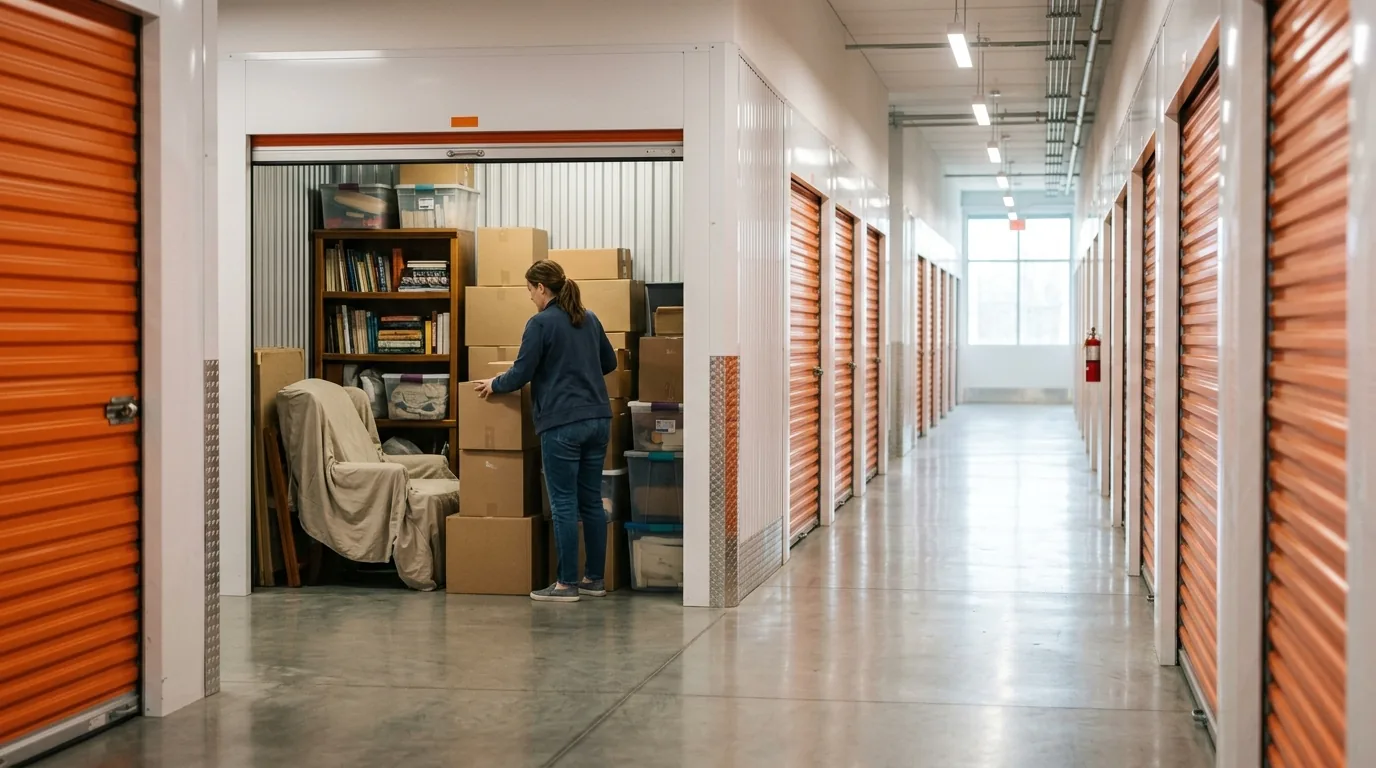
Leave a walkway down the middle if you will need to access items regularly. A 10x15 fully packed floor-to-ceiling is efficient for space but frustrating to dig through when you need something buried in the back corner. Store items you will need first, or last depending on your situation, near the door where they are easy to reach. Push heavier, rarely-needed boxes toward the back since you will not be moving them often and they can serve as a stable base for lighter items stacked on top. If you are storing anything seasonally, group those items together near the front rather than scattering them throughout the unit. This way a single trip covers what you actually came for instead of turning into an unpacking project that eats up your afternoon.
Cubic feet and what a 10x15 actually looks like
With standard 8-foot ceilings, a 10x15 unit holds about 1,200 cubic feet of usable space — roughly two-thirds the size of a standard one-car garage, or about the footprint of a spare bedroom. (Source: Public Storage)
In box terms, most facilities estimate a 10x15 holds somewhere around 100-150 standard moving boxes if that's mostly what you're storing, though that number drops fast once furniture and appliances start taking up floor space. (Source: Extra Space Storage) Keep in mind this size can't fit items longer than 15 feet or wider than 10 feet — that rules out most cars and boats, which need a dedicated vehicle storage space instead.
For comparison, a 10x10 unit, the next size down, holds roughly 800 cubic feet at the same 8-foot ceiling height. A 10x20, the next size up, holds close to 1,600 cubic feet. The jump from 10x15 to 10x20 adds meaningfully more room without doubling the footprint on the facility floor. That partial jump rather than a full doubling is part of why it is a common next step for anyone who finds themselves outgrowing the 10x15 size. You get substantial extra capacity without paying for or managing twice the space.
Packing tips specific to this storage unit size
- Dismantle furniture where you can — bed frames, table legs, and similar pieces take up far less room broken down than assembled
- Use sturdy boxes and packing tape rather than plastic bags, which don't stack reliably and can tear under weight
- Store fragile or flat items like mirrors, art, and mattresses standing upright rather than laid flat, so they don't bear the weight of stacked boxes
- Empty fuel from power tools or lawn equipment before storing, and cover metal parts to prevent rust
- Use the gaps between furniture pieces for smaller boxes instead of leaving that space empty
- Leave a small gap between boxes and the unit walls for airflow, which helps reduce moisture buildup, especially in non-climate-controlled units
- Place a pallet or a few wood planks under the bottom layer of boxes in a non-climate-controlled unit, keeping everything off a concrete floor that can hold ground moisture
(Source: Public Storage)
How common is renting a storage unit this size
Storage isn't a niche purchase — industry research compiled for America's SBDC network puts household penetration at roughly 9.4% of U.S. households renting a self-storage unit, with the average renter using about 5.4 square feet of storage per household member. Households (long-term and short-term combined) account for close to 70% of the industry's revenue, with businesses, military members, and students making up most of the rest. (Source: SBDCNet, America's SBDC network)
A 10x15 sits right in the middle of that household-use case. It is sized for a genuine apartment or small home's worth of belongings rather than the overflow-box storage a smaller unit handles, or the full-household long-term storage a much larger unit is built for. That practical positioning also explains why 10x15 units at well-run facilities can book up during peak moving season, roughly late spring through summer. Reserving ahead rather than assuming same-day availability is worth doing if your move-out date is fixed. Most facilities let you reserve a unit online for free with no commitment until move-in, which is worth doing even if your plans are not fully locked in yet. It costs nothing and holds your spot at the current rate. Ask directly whether the facility offers a rate lock for the length of your expected stay, since some raise monthly rates on existing tenants after the first few months and that increase can add up over a longer rental period.
Get quotes for your move
Compare real mover reviews and get matched — free, no obligation.
Frequently asked questions
A 10x15 unit (150 sq ft) typically fits a 2-bedroom apartment or a small house, including furniture and a full set of boxes.
Yes — it's one of the more commonly stocked mid-range sizes at most facilities, generally easier to find on short notice than the largest units.
If you're genuinely unsure and can afford the modest price difference, size up to 10x15 — a too-small unit forcing a second rental usually costs more than the extra monthly cost of the larger size.
Yes, a 10x15 comfortably fits a full living room set, a bedroom set, and a reasonable number of boxes — it's sized for a genuine apartment's worth of furniture, not just a few pieces.