How to pack a kitchen for moving
Updated September 5, 2026
Kitchens take longer to pack than any other room because so much of what's in them is fragile, oddly shaped, or heavy — plan for it to take a full day, and start it early rather than last.
On this page
- Dishes and glassware for a kitchen move
- Packing small kitchen appliances safely
- Knives and other sharp items in the kitchen
- Pantry and food items before an interstate move
- Pack the kitchen last, unpack it first
- Pots and pans go in their own box
- Pack in order of how often you use things
- Refrigerator and freezer take real prep time — start early
- Use dry pantry items to fill gaps in appliance boxes
- Frequently asked questions
Dishes and glassware for a kitchen move
- Wrap each plate individually in packing paper, and stack plates on their edge rather than flat — edge-stacking distributes impact better
- Wrap glasses and stemware individually; stuff hollow stemware with paper for structure
- Never let glass touch glass — a break in transit can crack its neighbors
- Use a dish-pack box (thicker walls, sometimes cell dividers) rather than a standard box for anything genuinely fragile
Packing small kitchen appliances safely
- Use original boxes if you kept them — they're sized and cushioned correctly for the item
- Remove detachable parts (blades, carafes) and wrap separately to prevent rattling damage
- Empty and dry anything that held liquid before packing
Knives and other sharp items in the kitchen
Wrap each knife individually, blade first, in thick cardboard or a dedicated knife sheath before adding paper padding around the outside. This two-layer approach protects the blade edge from dulling against other metal items and prevents anyone unpacking the box from catching an exposed edge. Cardboard from broken-down shipping boxes works fine if you do not have commercial sheaths; just fold it into a V-shape around the blade and tape it snug. Label the box clearly on multiple sides with something like 'Sharp Objects' or 'Kitchen Knives' so whoever opens it knows to work slowly and keep it away from children.
Pantry and food items before an interstate move
Unopened, non-perishable items generally travel fine, but check with your specific mover — many won't transport perishables, opened food, or liquids, and some restrict what's allowed on the truck at all. Plan to use up, donate, or discard what won't make the trip rather than discovering the restriction on moving day. See our items movers will not move guide for the full list.
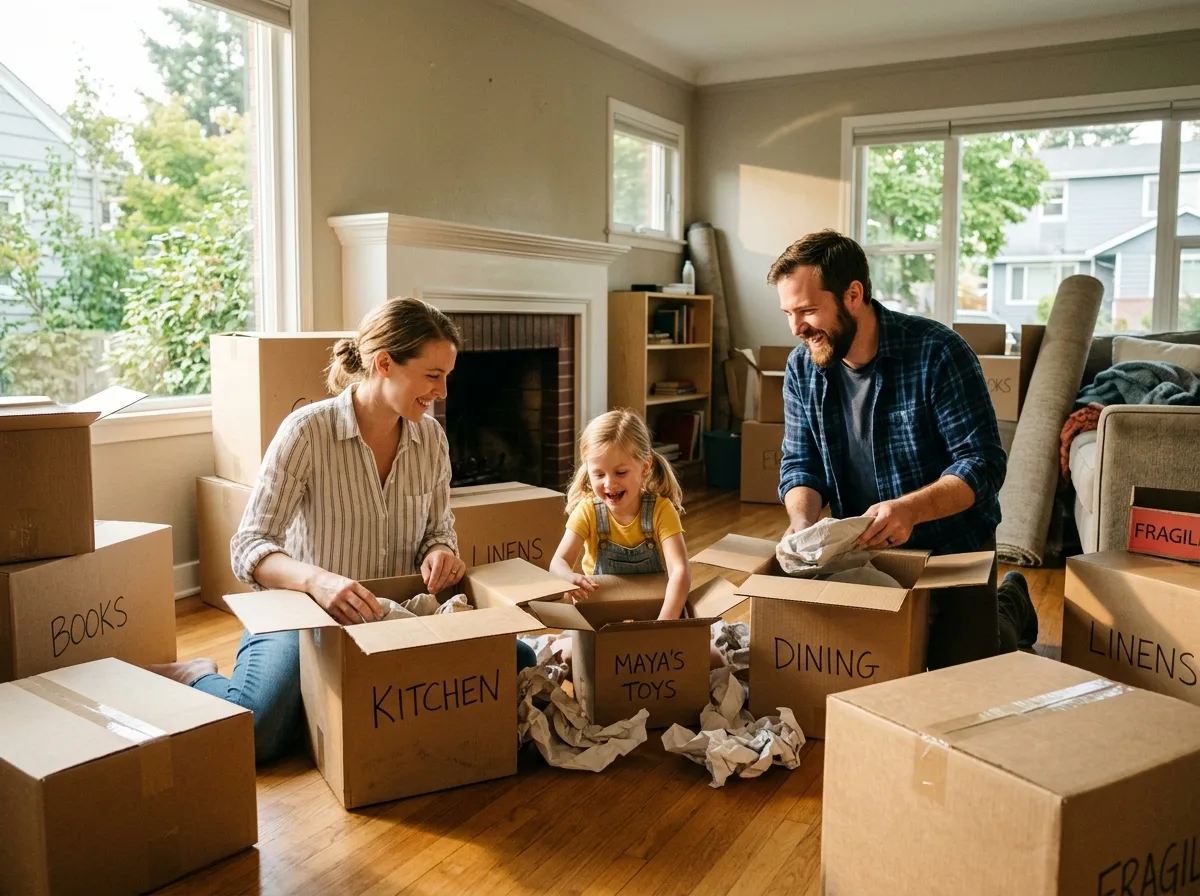
Would rather skip the packing?
Get quotes from full-service movers who pack for you — free, no obligation.
Pack the kitchen last, unpack it first
Set aside a small 'first day' box with basic dishes, utensils, a pan, and coffee supplies so you are not unpacking the entire kitchen before you can make a meal at your new home. Think through one full day of eating and drinking: a plate and bowl per person, a few forks and spoons, a sharp knife, a cutting board, a skillet or saucepan, dish soap and a sponge, and whatever gets you caffeinated in the morning. If you have pets, add their bowls and food to this same box. Keep it in your car if possible, or load it last on the truck and mark it so it comes off first. You will thank yourself when you are exhausted at 7 PM and do not feel like hunting through twenty boxes for a can opener.
Pots and pans go in their own box
Wrap cookware in packing paper the same way you'd wrap plates, and nest pots inside each other to save space — but keep pots and pans in a separate box from plates and other fragile dishware rather than mixing them together. Cookware is heavy enough that combining it with fragile items in one box raises the odds of something cracking under the added weight. (Source: United Van Lines)
Pack in order of how often you use things
Start with items you haven't used in months — seasonal bakeware, the fondue set, specialty gadgets — then move to occasionally used appliances like a slow cooker, and save the pots, pans, and dishes you use daily for last. Holiday cookie sheets, that ice cream maker you brought out twice last summer, and the mortar and pestle you keep meaning to use can all go into boxes weeks ahead without disrupting your routine. The slow cooker or rice maker comes next, since you can substitute other methods for a week or two. Your actual cooking setup stays functional right up until close to moving day, instead of packing randomly and losing access to something you need mid-week. This staged approach also lets you assess what you truly use and what might not be worth the space in the new kitchen.
Refrigerator and freezer take real prep time — start early
Plan for three steps in order: clean the fridge and freezer out completely, let it fully defrost (freezers especially can take a day or more), and then follow the manufacturer's manual for how to disconnect and secure it for transport. Skipping the defrost step or moving a fridge on its side against manual guidance is a common way people end up with a damaged compressor at the new place. Eating down the freezer and fridge contents in the weeks before moving day also means less food that has to be used up, given away, or thrown out at the last minute. (Source: Move.org)
Use dry pantry items to fill gaps in appliance boxes
Dense, uniformly shaped pantry staples — boxed cereal, bags of rice or dried beans, a canister of flour — work well as filler around small appliances that have been disassembled and boxed with their parts. It saves buying extra packing material and uses space you'd otherwise leave empty. Label knife boxes with an arrow showing which way the blade is pointing, in addition to a "fragile" or "sharp" marking, so whoever opens it knows how to reach in safely. (Source: Move.org)
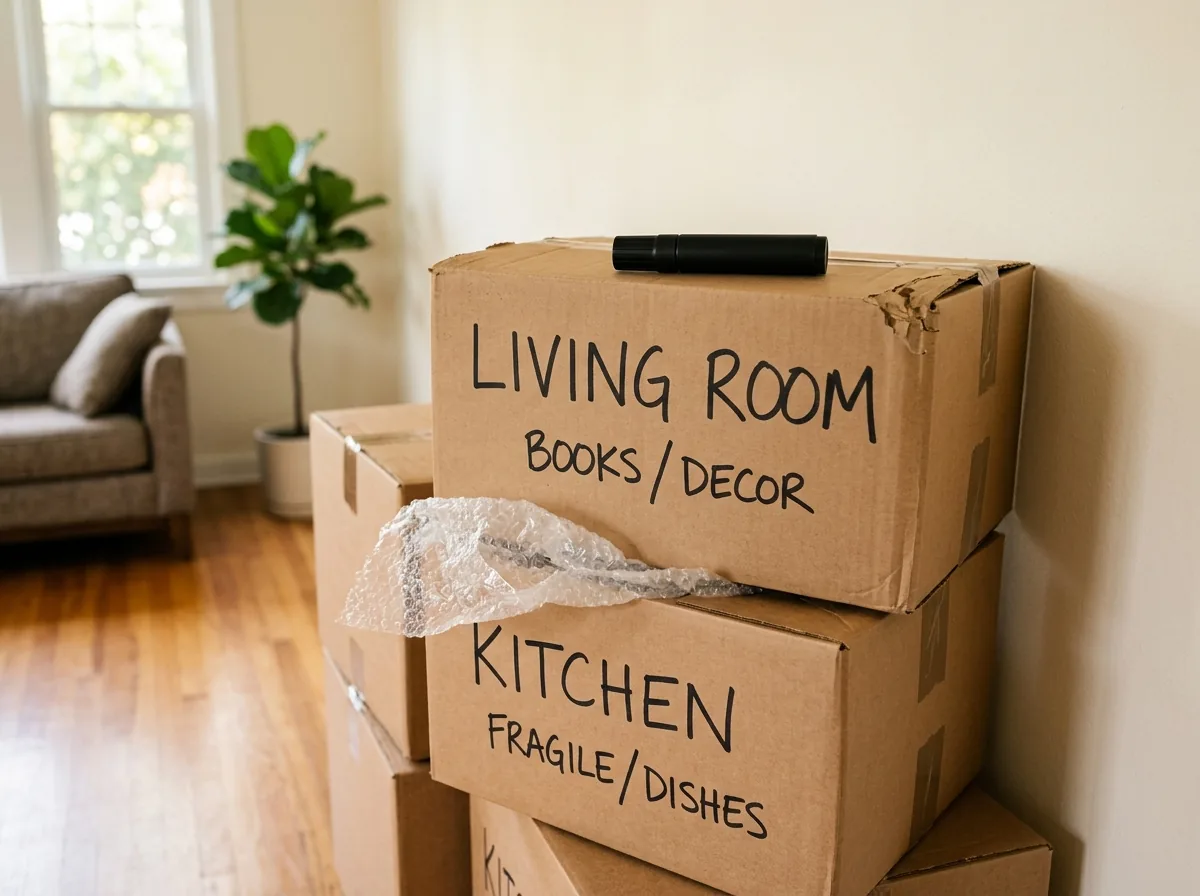
Get quotes for your move
Compare real mover reviews and get matched — free, no obligation.
Frequently asked questions
Yes for a long interstate move — wrap each plate individually and stack them on their edge (like records) rather than flat, which distributes impact better if the box is jostled.
Wrap each piece individually, stuff the inside of hollow stemware with paper for structure, and never let glass touch glass directly — a broken piece can crack its neighbors on a long drive.
Unopened, non-perishable items can travel, but interstate movers often won't transport perishables or opened food — check with your specific mover, and plan to use up or donate what won't survive the trip.
Overfilling boxes with dense items like dishes and small appliances — a box packed to the brim with heavy items is both a lifting-injury risk and more likely to fail structurally in transit than a properly weight-balanced one.