Free vs. paid moving boxes
Updated September 5, 2026
This isn't an all-or-nothing decision — the right approach for most moves is a mix, based on what's going inside each box, not a blanket rule about free vs. new.
On this page
- Where free moving boxes work fine
- Where it's worth paying for new moving boxes
- Always inspect a free box before using it
- Pass moving boxes along after your move
- More places to look for free boxes
- What new moving boxes actually cost, for comparison
- When a box fails inspection, recycle it properly rather than tossing it in the trash
- Frequently asked questions
Where free moving boxes work fine
- Books, linens, and other non-fragile items where box strength matters less than volume
- Anything you're not too concerned about protecting perfectly, like garage or storage overflow items
- Any box you inspect first and confirm is still sturdy — no water damage, crushing, or weakened corners
Grocery stores, liquor stores, bookstores, and office supply stores are common sources — ask at less busy times, like mid-morning on weekdays or early afternoon, when staff have more breathing room to help you. Community marketplace listings often have people giving away leftover boxes after their own move, and these can be surprisingly good quality since they have only been used once.
Where it's worth paying for new moving boxes
- Dish-pack and other specialty boxes for kitchen breakables, where consistent wall thickness genuinely reduces damage risk
- Wardrobe boxes — there's no practical free substitute for the hanging-bar function
- Anything heavy, where a weakened free box is more likely to fail structurally mid-move
Always inspect a free box before using it
Corrugated cardboard loses rigidity with repeated compression and humidity exposure — a box that looks fine can already be weakened underneath the surface. Check corners and seams specifically, since those areas bear the most stress during lifting and stacking. Do not use anything that shows water staining, which usually means the cardboard's structural integrity is already compromised and will likely fail when loaded with dishes or books.
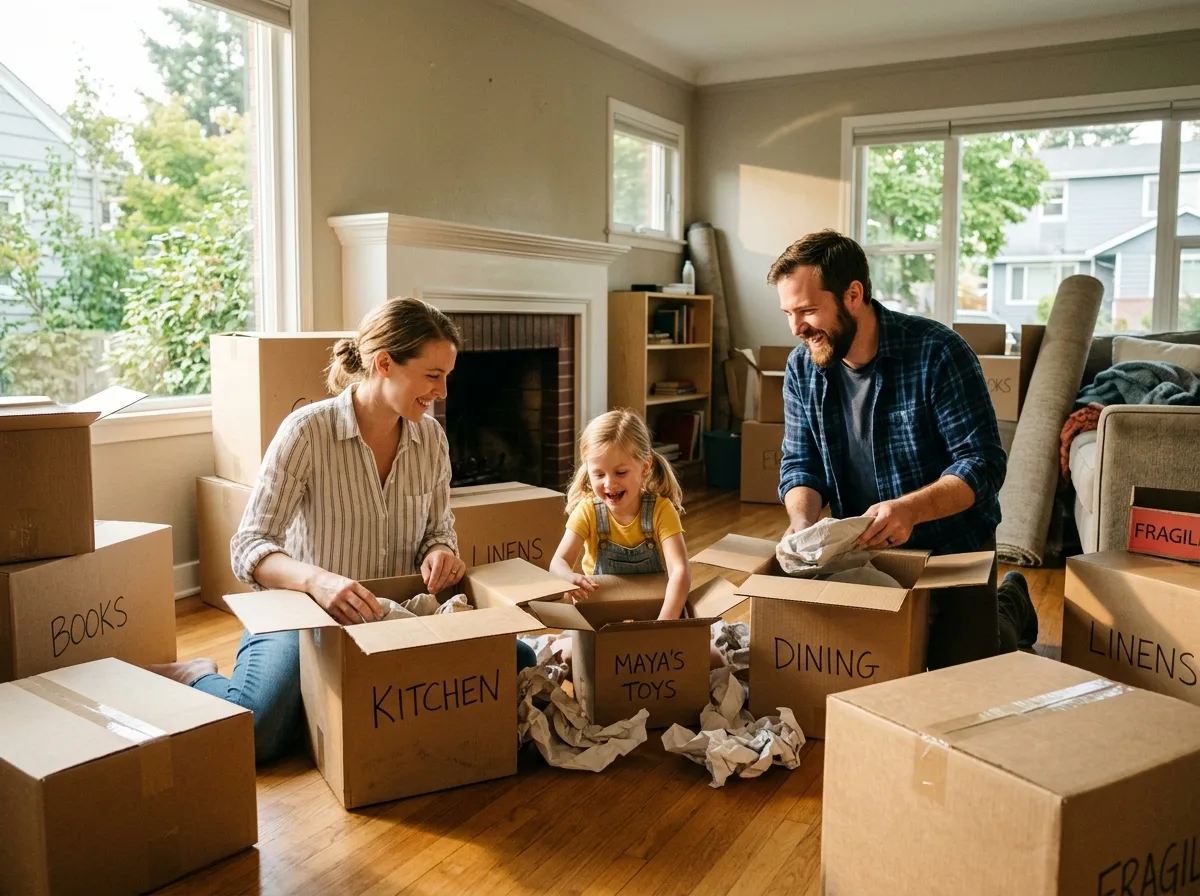
Would rather skip the packing?
Get quotes from full-service movers who pack for you — free, no obligation.
Pass moving boxes along after your move
Rather than breaking everything down for recycling by default, consider listing sturdy boxes on a community marketplace — it is a fast way to get them to someone else's move rather than the recycling bin. This also builds a habit of reuse that often works in your favor, since what you give away now tends to be what you will draw from for your next move too.
More places to look for free boxes
Beyond stores, a few sources people overlook: the Freecycle Network (a nonprofit reuse community with local groups you can join online), the Buy Nothing app (search giveaways within your area), libraries and local schools (call ahead — book and supply shipments arrive in sturdy boxes, especially around the start of a semester), and apartment complex management offices, which deal with move-in and move-out box turnover constantly. U-Haul's Customer Connect box exchange and neighborhood apps like Nextdoor are also worth checking. (Source: NerdWallet)
Timing matters more than people think — stores restock and unpack shipments in the late evening or early morning, so that is when staff are most likely to have extra boxes on hand and least likely to have already broken them down for recycling. Start collecting boxes four to six weeks before your move rather than the week before, since sourcing enough takes longer than most people expect. Having a small surplus also saves you from last-minute scrambling when you underestimate how many boxes a closet or pantry actually requires.
What new moving boxes actually cost, for comparison
New moving boxes generally run about $1 to $5 each depending on size, and a typical 2-3 bedroom household needs somewhere around 60 to 100 boxes total — meaning buying everything new can run roughly $100 to $400 just in boxes. That's the real cost baseline that makes mixing in free boxes for non-fragile items worth the effort, even if you end up paying for specialty boxes where it counts. (Source: HireAHelper)
When a box fails inspection, recycle it properly rather than tossing it in the trash
Not every free box passes the inspection described above, and that's fine — a box with water staining or crushed corners still has a second life as recycling rather than landfill waste. The EPA's guidance on cardboard is simple: flatten it before it goes in the bin, since flattened boxes take up far less space and process more easily at recycling facilities than boxes left assembled. Cardboard is also one of the more effective materials to recycle from an energy standpoint — EPA's WARM model estimates recycling it saves upward of 24 percent of the energy needed to produce the same amount of cardboard from virgin materials. (Source: EPA)
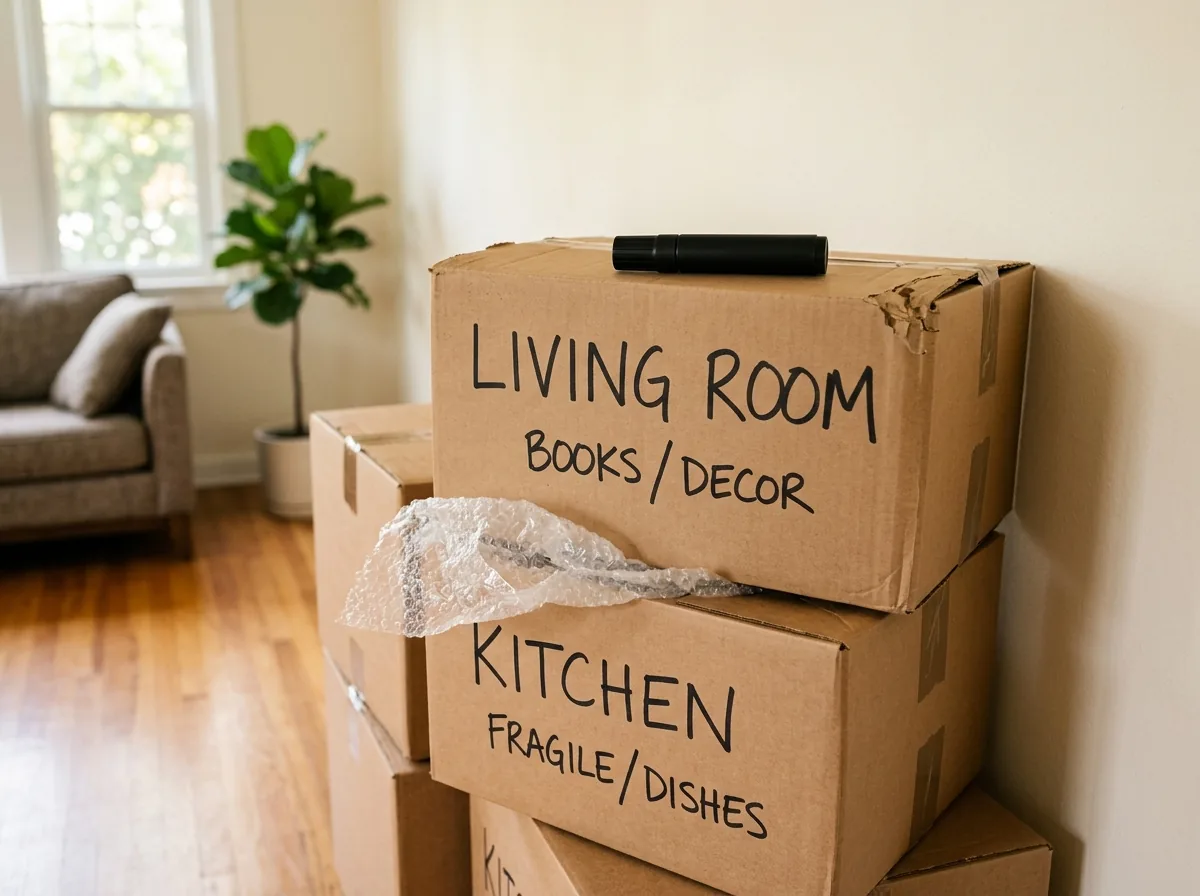
Get quotes for your move
Compare real mover reviews and get matched — free, no obligation.
Frequently asked questions
Grocery stores, liquor stores, bookstores, and office supply stores often have sturdy boxes to give away — ask at less busy times, and check community marketplace listings where people give away leftover boxes after their own move.
Often somewhat, depending on how many times they've been reused and how they were stored — corrugated cardboard loses rigidity with repeated compression and humidity exposure, so inspect each one rather than assuming uniform quality.
Yes — for heavy or fragile items, uniform new boxes with known wall thickness (like dish-pack boxes) reduce real damage risk in a way that's worth the cost, even if you're using free boxes for everything else.
Yes — community marketplace listings are a common way to pass boxes along to someone else's move rather than breaking them down for recycling, and it's worth doing before default disposal.