How many moving boxes do you need?
Updated September 5, 2026
Box count depends on home size and how much you own, but most people guess low — here's a realistic starting range by home size, plus how to adjust it for your actual situation.
On this page
- General moving box estimates by home size
- What actually moves your box count up or down
- When in doubt, round up your box count
- Box count can affect your moving cost too
- How online moving box calculators estimate this
- A second way to sanity-check your number: total box count
- A per-room alternative if your home doesn't fit the size categories well
- Frequently asked questions
General moving box estimates by home size
| Home size | Small boxes | Medium boxes | Large boxes |
|---|---|---|---|
| Studio / 1BR apartment | 8-12 | 10-15 | 5-8 |
| 2-bedroom home | 15-20 | 20-25 | 10-15 |
| 3-bedroom home | 20-30 | 30-40 | 15-20 |
| 4+ bedroom home | 30-40 | 40-55 | 20-30 |
Add a few dish-pack boxes for kitchen breakables and one wardrobe box per closet's worth of hanging clothes. These specialty items sit on top of the base ranges above, so factor them in after you have your room-by-room estimate. Dish-pack boxes come with built-in dividers that protect plates, glasses, and serving pieces from knocking against each other during transit, which makes them worth the extra cost even if standard boxes seem sufficient. Wardrobe boxes save you from folding and wrinkling suits, dresses, and coats that you would otherwise need to iron or press at your destination.
What actually moves your box count up or down
- Book and media collections push small-box count up significantly — these are dense and need smaller boxes to stay liftable
- Minimal furniture, heavy on soft goods (linens, clothing, pillows) shifts the mix toward large boxes
- A stocked kitchen often needs more dish-pack and medium boxes than the general estimate accounts for
- Recent decluttering can meaningfully reduce every category — worth doing before you start counting, not after
When in doubt, round up your box count
Running out of boxes mid-pack means an inconvenient store run at an inconvenient time. Extra flattened boxes cost little to keep on hand, and many retailers accept returns of unused, unassembled ones. If you are between two size estimates, pack toward the higher range. Having twenty spare boxes tucked behind a door beats halting your momentum to drive across town during evening hours or on a weekend when stores close early. The same logic applies to tape, bubble wrap, and packing paper — these consumables disappear faster than expected, and buying in modest bulk usually lowers the per-unit cost anyway.
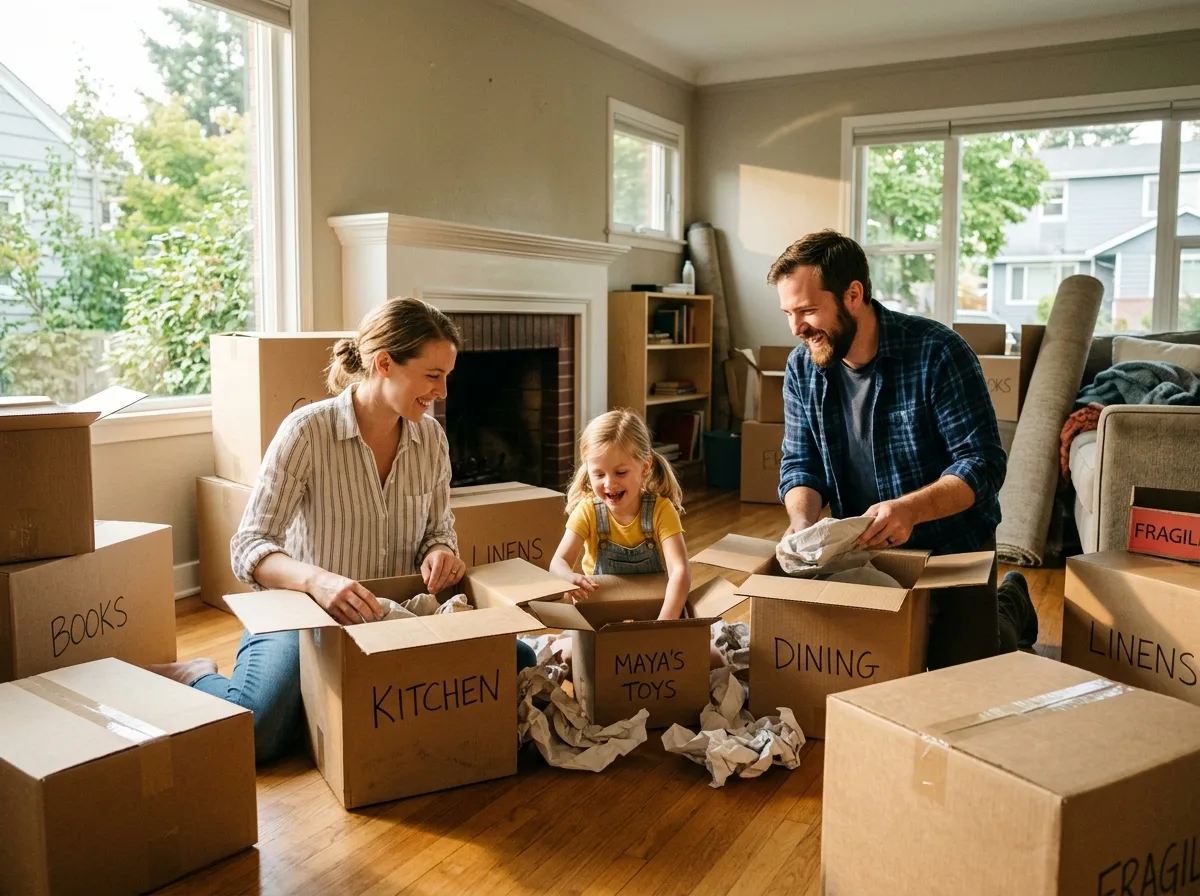
Would rather skip the packing?
Get quotes from full-service movers who pack for you — free, no obligation.
Box count can affect your moving cost too
Since many interstate movers price partly by weight or cubic footage, more boxes generally means a higher quote — this is another reason decluttering before packing is worth the effort, not just for convenience. See our weight vs. cubic feet guide for how movers actually calculate this.
How online moving box calculators estimate this
Storage and moving companies that run box calculators tend to land on similar ranges to the table above — for example, a one-bedroom apartment typically comes out to roughly 20 to 45 boxes depending on how much the household owns and how many people live there. (Source: Extra Space Storage)
The same source notes that sorting through belongings and donating or discarding what you do not need before you start packing can cut total box count by roughly 20 to 40 percent. That is a meaningful reduction that is easy to skip when you are in a hurry to start packing, but worth doing first. Go room by room with three sorting categories: keep, donate, and discard. The 20 to 40 percent range depends on how long you have lived in your current place and how much you have accumulated without regular purging. People who have not moved in a decade or more tend to land at the higher end of that range. Starting this process two to three weeks before packing day gives you time to schedule donation pickups or make drop-off trips without adding pressure.
A second way to sanity-check your number: total box count
Beyond the small/medium/large breakdown, it helps to have a ballpark total to compare against. One moving company's internal estimates put a one-bedroom apartment at roughly 45 boxes total, a two-bedroom apartment at roughly 54, and a full single-family home at around 100, scaling with bedroom count and how much the household owns. If your own count from the table above lands far outside that range for your home type, it's worth double-checking whether you've accounted for closets, the garage, and any basement or attic storage — these get missed more often than the main living spaces. (Source: Olympia Moving & Storage)
Item-specific rules of thumb can also help fine-tune the estimate. A wardrobe box generally holds about two feet of hanging clothes measured along the closet rod. A typical bookcase adds roughly six small or medium boxes on its own. Both are easy to undercount if you are only estimating by room. Bookcases often contain more volume than they appear to at a glance — shelves stacked two layers deep with paperbacks, or mixed collections of hardcovers, photo albums, and loose files all add weight and bulk. For closets, measure the actual rod space rather than guessing; a shallow closet with dense hanging items may need more wardrobe boxes than a wide closet with sparse clothing spaced far apart.
A per-room alternative if your home doesn't fit the size categories well
The bedroom-count table above is a solid starting point, but it assumes a fairly typical home. If your layout is unusual — a lot of small rooms, an oversized great room, a finished basement — a per-room estimate can be more accurate: roughly 10 to 15 boxes per room as a baseline, then adjust up or down based on how that specific room is actually used, since a home office or craft room often needs more boxes than its square footage suggests. One real estate brokerage's moving guide also recommends buying about 10 percent more boxes than your estimate calls for, specifically to avoid a last-minute supply run mid-pack. (Source: Redfin)
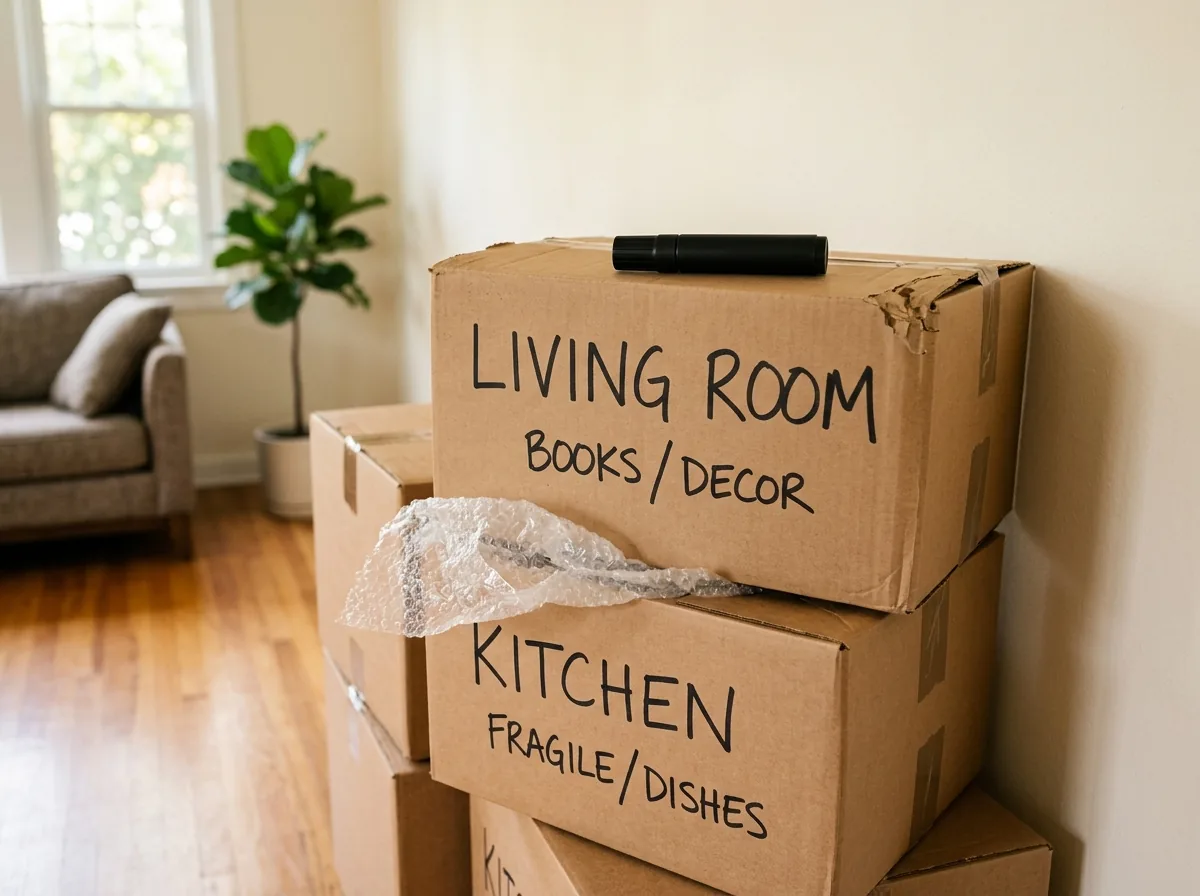
Get quotes for your move
Compare real mover reviews and get matched — free, no obligation.
Frequently asked questions
Overestimate — running out of boxes mid-pack means an inconvenient last-minute run, while unused flattened boxes cost nothing and many retailers accept returns of unused ones.
Roughly, but kitchens and garages vary more than other rooms — a heavily stocked kitchen or a garage full of tools and equipment can add several boxes beyond these general ranges.
Small boxes hold dense items like books and canned goods safely, and most households have more of these than bulky lightweight items — large boxes are mainly for linens, pillows, and similarly light bulky things.
Yes, often significantly — decluttering before packing (not during, which slows you down) is one of the few ways to meaningfully cut both box count and moving cost, since interstate movers often price partly by weight or volume.