How do long-distance movers work?
Updated September 5, 2026
An interstate move runs through five stages: estimate, booking, pickup, transit, and delivery — each with its own things to know and confirm in writing. Here's what actually happens at each step.
On this page
- 1. Getting your long-distance moving estimate
- 2. Booking
- 3. Pickup day for your interstate move
- 4. Transit
- 5. Delivery at your new home
- Common misconceptions about long-distance movers
- Why delivery windows aren't guaranteed dates
- Paying for a faster, more predictable long-distance delivery
- Frequently asked questions
1. Getting your long-distance moving estimate
A mover surveys your home — in person, by video walkthrough, or (least accurately) by phone — and gives you a written estimate. Confirm whether it's binding, non-binding, or binding-not-to-exceed; see our full guide on estimate types. Getting estimates from at least three movers is worth the extra hour it takes, since prices for the same job can vary significantly between companies. If a mover offers a firm number without ever walking through your inventory — in person or by video — treat that as a red flag rather than a convenience.
2. Booking
Once you accept the estimate and lock in your move date, you will typically need to put down a deposit. Make sure you get written confirmation of your actual reserved date — completing a survey alone does not mean a crew is officially booked for your move. Ask upfront what happens if your plans shift and you need to change the date after booking. Many moving companies charge a rescheduling fee, and this is especially common during peak summer moving season when demand surges and calendars fill up quickly. You should also get the cancellation policy in writing, including exactly how much of your deposit you can get back and what deadline you need to meet to receive a refund.
3. Pickup day for your interstate move
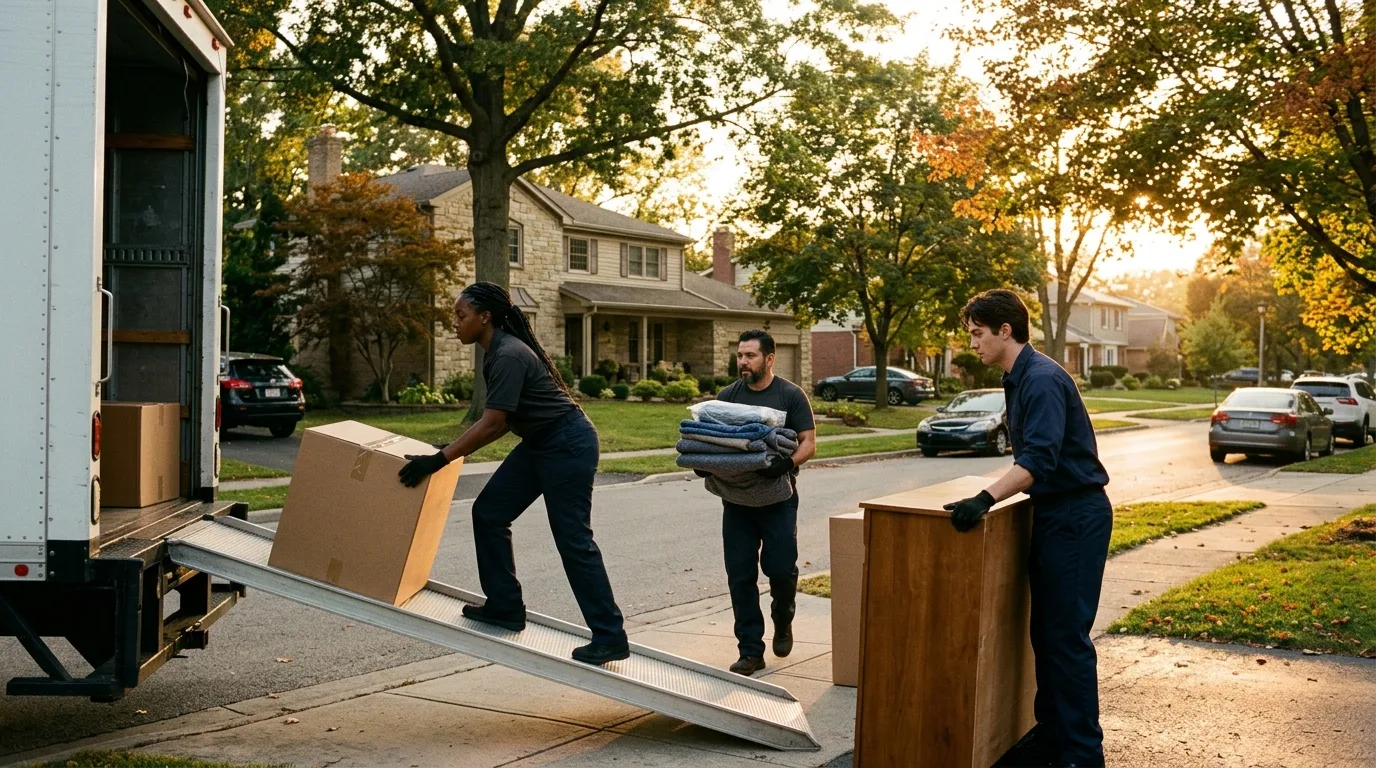
The moving crew arrives to pack your belongings if that service is included in your quote, then loads everything onto the truck. They will do a final inventory walkthrough with you, and if your quote is based on weight, they will weigh the truck. You should receive a copy of the inventory list before the truck departs. Take photographs of valuable items or anything that is already damaged before the crew loads them, so you have your own visual record to compare against when your shipment is delivered. If you are paying by weight, ask to see the weight ticket yourself instead of simply accepting the total you are given — you have the right to view it, and in many cases you can request a reweigh if something seems off. Before the truck pulls away, do a thorough final walkthrough of every closet, cabinet, attic space, and the garage. This is realistically your last chance to catch anything left behind, since arranging a return trip after the crew has departed is usually not feasible.
4. Transit
Your shipment heads toward your destination — sometimes traveling directly, sometimes consolidated with other customers' shipments along the same route for efficiency, which may involve a brief stop at a warehouse. Ask your mover how you will receive updates while your belongings are in transit. For a cross-country move, transit time can reasonably range from one to three weeks depending on the season and how far your specific route is from the mover's regular corridors. A move between two major metro areas typically moves faster than one to or from a rural location. If you have a specific need for timely updates, such as closing on a house on a fixed date, ask whether you can reach the driver directly. That channel is often faster than routing questions through a call center.

Comparing movers already?
See real, unedited reviews for the 10 biggest national van lines before you book.
5. Delivery at your new home
A crew delivers and unloads your shipment — this may be the same crew that loaded your belongings, or it may be a different local team. Inspect everything against the inventory sheet before you sign off, and write down any damage immediately while the crew is still there, not after they have left. Keep some cash available for the delivery crew, since tipping is customary though not mandatory. You should also have a plan ready for where large furniture goes, so the crew is not standing around waiting for you to make placement decisions room by room. Under federal rules, movers set a limited window for filing a written claim for loss or damage on an interstate shipment, so do not delay reporting anything you notice, even if it seems minor. Check your paperwork for the exact deadline so you do not miss it.
Common misconceptions about long-distance movers
- "My stuff goes straight from my old door to my new door." Often not true — consolidated shipments and warehouse stops are normal and don't mean anything has gone wrong.
- "The quote is the final price." Only true for a binding or binding-not-to-exceed estimate. A non-binding estimate is adjusted to actual weight, which can raise (or lower) the final bill.
- "Any delay means something's wrong." Weather, consolidation logistics, and route changes are all normal parts of interstate transit — ask for updates rather than assuming a problem.
- "I don't need to be home for delivery." You (or an authorized adult) generally do need to be present to inspect the inventory and sign off — arrange this in advance if your schedule is tight.
- "A binding estimate can never change." It can still change if you add items or services after the estimate is written — the binding price covers what was actually surveyed, not whatever ends up on the truck.
- "Movers automatically insure my belongings for full value." The basic liability coverage required by law is often minimal and calculated by weight, not item value — full-value protection is usually a separate, purchased option worth asking about explicitly.
- "A lower quote always means a better deal." An unusually low estimate compared to every other mover you talked to is more often a sign of a lowball tactic (with a big final bill) or a red flag for legitimacy than genuine savings — compare it against the FMCSA's registered-carrier database before booking.
- "Once I've paid the deposit, the price is locked in." A deposit secures your date, not your final price, unless you also have a binding or binding-not-to-exceed estimate in writing — the two are separate protections.
Why delivery windows aren't guaranteed dates
Most long-distance carriers operate as what the industry calls "irregular route carriers" — rather than running fixed routes like a bus line, they plan each truck's path around the specific mix of shipments heading in a similar direction, then load and deliver multiple households' belongings along that route. A standard moving van (commonly 53 feet) usually carries more than one family's shipment unless a single home fills it. On top of that, federal Department of Transportation rules limit how many hours a driver can be on the road without rest, and weather or mechanical issues add further variability — which is why a delivery window, not an exact date, is the realistic promise most movers can make. This is also part of why local moves generally offer tighter, same-day delivery — the irregular-route model that creates delivery windows is specific to long-haul interstate carriers, not the mover down the street. (Source: United Van Lines)
Paying for a faster, more predictable long-distance delivery
If a standard shared-load delivery window (commonly 7-21 days depending on distance) doesn't work for your schedule, ask about direct or expedited service — sending your shipment on its own truck instead of consolidating it with others. It's meaningfully more expensive, sometimes an additional $2,500-$5,000 depending on distance, but it trades a wide delivery window for a much more predictable one. Worth asking about specifically if you have a hard move-in date rather than assuming it's not an option. Ask about this option as early as possible, ideally when you first request estimates, since availability and pricing for expedited or exclusive-use trucks can be limited during peak summer months when demand for trucks is highest across the industry. (Source: American National Movers)
Get quotes for your move
Compare real mover reviews and get matched — free, no obligation.
Frequently asked questions
Not always — for a full-service interstate move, the loading crew and delivery crew are sometimes different local teams, with a separate long-haul driver in between. Ask your mover how your specific move is staffed.
Carriers often consolidate multiple customers' shipments heading the same general direction onto one truck for efficiency, which can mean a brief warehouse stop while your shipment is matched with others. This is normal, but ask for an estimated delivery window either way.
Most interstate movers give a delivery window (a range of days) rather than a single guaranteed date, since transit depends on route, weather, and how shipments are consolidated. Ask specifically whether your quote includes a guaranteed date and what compensation applies if it's missed.
Many movers offer some form of tracking or a dedicated contact for updates — ask before booking, since 'we'll call you' and a real tracking system are very different experiences during a multi-day transit.