Best interstate movers in San Francisco, CA
Beyond the statewide California basics, San Francisco has its own housing stock, traffic patterns, and building logistics worth knowing before you book.
- Real customer reviews — never fabricated
- FMCSA registration data linked directly
- Free to use, no obligation
Get matched with San Francisco movers
Tell us about your move and we'll connect you with movers who serve your route. Free, no spam.
National interstate movers serving San Francisco
Every major national van line operates in the San Francisco area. Ranked here by real Google rating:




Get quotes for your San Francisco move
Tell us your route and home size — free, no obligation.
Typical interstate moving cost in San Francisco by home size
| Home size | Short-distance | Medium-distance | Long-distance |
|---|---|---|---|
| Studio / 1 bedroom | $1,600–$2,800 | $1,900–$3,400 | $2,200–$4,000 |
| 2 bedroom | $2,500–$4,200 | $3,000–$5,200 | $3,500–$6,200 |
| 3 bedroom | $3,600–$5,800 | $4,300–$7,200 | $5,000–$8,500 |
| 4+ bedroom | $5,200–$8,000 | $6,500–$10,000 | $7,500–$12,000+ |
See our San Francisco moving cost calculator for the full home-size × distance breakdown, or the general moving cost calculator for any origin.
Popular interstate moving routes to and from San Francisco
Each corridor below has its own dedicated page with typical cost, transit time, and what to plan for on that specific route — pulled from the same underlying route data used across this site, not a separate estimate.
| Route | Distance |
|---|---|
| San Francisco to Portland | ~635 miles |
| San Francisco to Boise | ~630 miles |
San Francisco to Portland
Why people make this move: Lower housing costs than most of California, particularly the Bay Area
Worth knowing: This corridor runs mostly along I-5 — a relatively straightforward drive with fewer mountain-pass concerns than routes further east
Oregon (especially Portland and the Willamette Valley) sees far more rain than most of California — mild temperatures year-round, but persistently gray and wet outside summer.
Full San Francisco–Portland route breakdown →San Francisco to Boise
Why people make this move: Significantly lower housing costs than most of California
Worth knowing: Boise's rapid growth in recent years has pushed local housing costs up substantially — the gap with California has narrowed compared to a few years ago
Idaho has a real four-season climate with cold, snowy winters, unlike most of California — a bigger adjustment than Boise's growing reputation as a California-adjacent destination might suggest.
Full San Francisco–Boise route breakdown →What's specific to moving to San Francisco
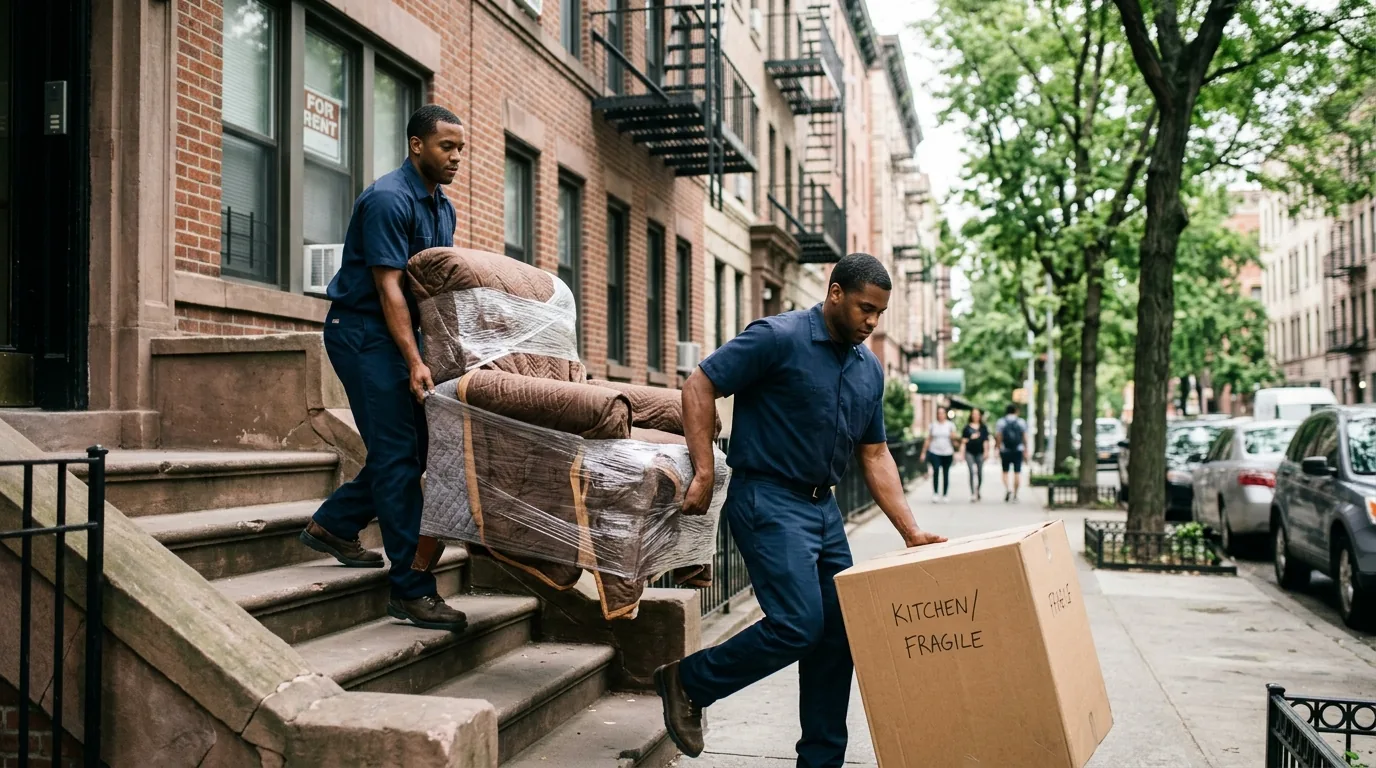
San Francisco's famously steep hills (Russian Hill, Nob Hill, parts of the Mission) are a genuine truck-access challenge, not just a tourist cliché — confirm your mover has real experience with your specific street's grade. A standard box truck on a sharp incline risks bottoming out, burning brakes, or failing to restart on a manual transmission, and some streets are outright prohibited for commercial vehicles above certain weights. Walk the route yourself with a measuring eye: low-hanging branches, parked cars that narrow the roadway, and switchback turns can turn a straightforward unload into hours of maneuvering. Ask prospective movers directly how they've handled similar grades, not whether they've worked in the city generally.
Specialty moving services for San Francisco
Piano moving in San Francisco
Piano moving is one of the more commonly requested specialty services for interstate movers in San Francisco. Given the city's famously steep hills in neighborhoods like Russian Hill and Nob Hill, getting a heavy instrument up or down narrow streets requires movers with real experience handling your specific street's grade. The dense, historic Victorian and Edwardian buildings throughout many neighborhoods add further complexity, with tight staircases and limited access points that demand careful planning. Our piano moving guide covers how to vet movers for these exact challenges. See our full guide →
Antique and fine art moving in San Francisco
Antique and fine art moving is one of the more commonly requested specialty services for interstate movers in San Francisco. The city's housing stock of historic Victorian and Edwardian multi-family buildings means many residents own period-appropriate furnishings and artwork that require specialized packing and handling. Navigating steep hills in areas like Nob Hill and the Mission with fragile, high-value items only increases the need for experienced crews. See our complete guide to protecting antiques during a San Francisco move. See our full guide →
Appliance moving in San Francisco
Appliance moving is one of the more commonly requested specialty services for interstate movers in San Francisco. The mix of historic multi-family buildings and newer high-rises in SOMA means appliances often must navigate tight Victorian staircases or coordinated loading dock schedules with COI requirements. Steep grades on streets throughout Russian Hill and Nob Hill can also complicate transport of heavy washers, dryers, and refrigerators. Our appliance moving guide explains how to prepare for these logistics. See our full guide →
Popular San Francisco neighborhoods for interstate relocators
Alternatives to a full-service San Francisco mover
For moves under 500 miles, the cost gap between full-service and DIY options narrows enough that it is worth comparing both approaches before deciding. Shorter distances mean less fuel, fewer overnight stays for crews, and lower overall mileage charges, which brings professional mover estimates down closer to what you might spend renting a truck and handling everything yourself. That said, the DIY route still has hidden costs that are easy to overlook at first glance. You will need to factor in truck rental, fuel, mileage fees, packing supplies, equipment rentals for heavy items, and the value of your own time spent loading, driving, and unloading. Depending on your schedule and physical ability, a full-service company handling the labor might justify a slightly higher price tag, especially if you are moving on a tight timeline or have bulky furniture to navigate through stairs or narrow doorways. The best move is to get at least two quotes from full-service movers and run your own detailed cost estimate for a rental truck before assuming the DIY path saves money for a move to or from San Francisco specifically.
Still deciding on a mover?
Compare real reviews for movers serving San Francisco, or get free quotes now.
Frequently asked questions
For a typical 2–3 bedroom home moving 1,000+ miles, expect roughly $5,000–$8,500 with a full-service mover. Shorter regional moves cost meaningfully less. Use our moving cost calculator for a number specific to your exact origin and home size.
San Francisco's housing is dense and largely historic — Victorian and Edwardian multi-family buildings dominate many neighborhoods, alongside newer high-rises in SOMA that require COI and loading dock scheduling. These older structures mean narrow staircases, tight hallways, and original woodwork that scratches easily, so crews often need to hoist furniture through windows or disassemble pieces in ways newer buildings rarely demand. The high-rises add bureaucratic layers: building management will want certificates of insurance on file days ahead, and loading docks operate on strict time blocks with no grace period for late trucks. Missing your dock window can mean rescheduling the entire move or paying steep overtime fees to the building.
Street parking is extremely limited and expensive citywide — a parking permit for your moving truck is often necessary, and booking one in advance is worth doing well before your move date, not the week of. The permit process involves city transportation departments, sometimes with separate applications for metered spaces versus residential zones, and approval windows vary by district. Without reserved space, your crew circles blocks burning billable hours or parks illegally and risks tickets that get passed to you, or worse, a tow mid-move. Scout your exact loading zone in person beforehand, measuring whether a full-length truck fits, and post no-parking signs yourself the night before if the permit allows — assuming others will respect unmarked space is a costly gamble.
Mission District, Nob Hill, SOMA, Sunset/Richmond are among the most commonly mentioned — each has different logistics, so ask your mover about experience with your specific area.
4-8 weeks ahead for most of the year, 8-12 weeks ahead if moving during peak season (May-August). Popular destination cities can book up faster than less in-demand markets.