How to label moving boxes
Updated September 5, 2026
A good labeling system pays off most at the two busiest moments of a move: loading (movers know where to place each box) and unpacking (you know what to open first).
On this page
- The box-labeling basics that matter most
- Color-coding moving boxes by room
- Numbering boxes and keeping a master inventory
- Mark your priority moving boxes clearly
- Label right when you seal — not before
- Keep boxes under about 50 pounds — and write the room, not just a category
- Number boxes within each room by priority, and mark doorways to match
- Frequently asked questions
The box-labeling basics that matter most
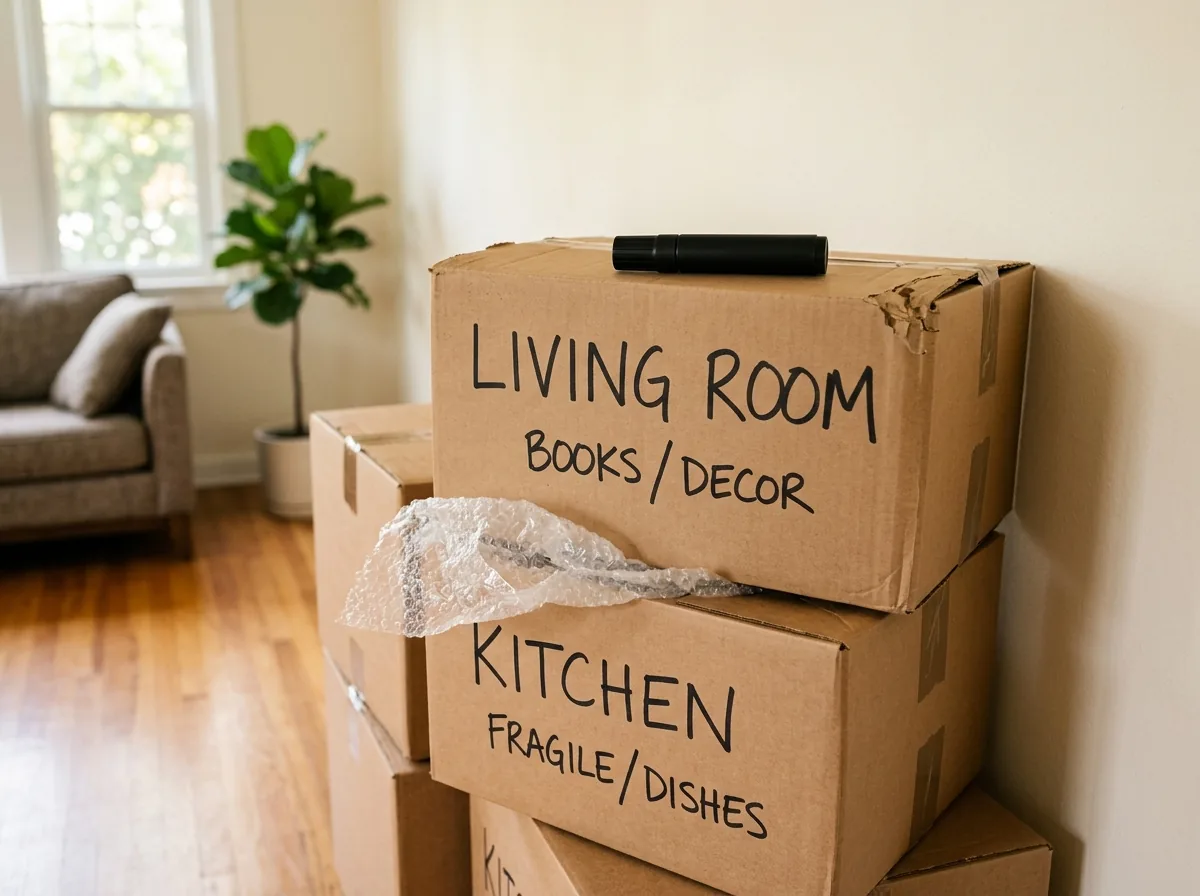
- Room name, written clearly, on the top and at least two sides — a single-side label gets missed once boxes are stacked
- General contents, not just the room ("kitchen — pots/pans" rather than just "kitchen")
- A "fragile" marking on any box that needs careful handling, in addition to the room label
- "This side up" arrows for anything orientation-sensitive
Color-coding moving boxes by room
Assigning one color of tape or sticker per room lets movers place boxes correctly on sight during the physically demanding unload process, without stopping to read a written label on every box. A mover carrying a heavy box up stairs or through a narrow hallway can spot a red sticker and know instantly that box belongs in the kitchen. This is worth the small extra setup time for a full household move, less critical for a small studio or one-bedroom where the distance from truck to room is short and the total box count is low enough that reading labels does not slow the process noticeably.
Numbering boxes and keeping a master inventory
For larger moves, numbering each box and keeping a simple cross-referenced list (box number → general contents) makes it much easier to confirm everything arrived and to find a specific item without opening every box in the stack. This is especially useful if you're also using a storage unit or container mid-move — see our storage & containers guides.
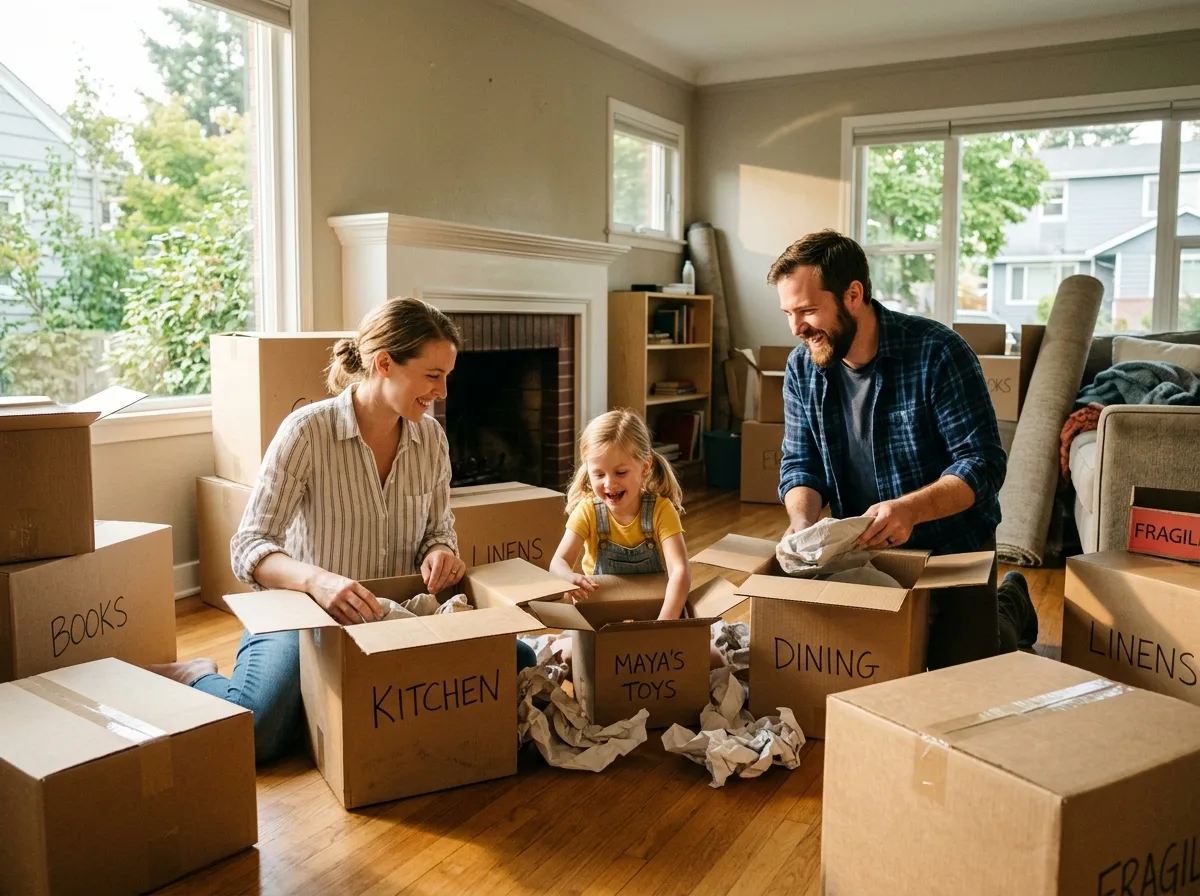
Would rather skip the packing?
Get quotes from full-service movers who pack for you — free, no obligation.
Mark your priority moving boxes clearly
Beyond room and contents, mark the handful of boxes you'll need immediately with a distinct marker like a bright star or OPEN FIRST label. First-day kitchen items, toiletries, and bedding are the usual candidates. This keeps them from getting buried under everything else during unloading, when the default pattern is to stack boxes against walls and work inward. A visible marker also helps you direct placement without hovering over every box yourself.
Label right when you seal — not before
Label each box as soon as you pack and seal it, rather than writing labels on empty boxes ahead of time. Plans change during packing more often than you'd expect, and a box pre-labeled "kitchen" that ends up holding garage overflow just creates confusion later. Make labeling part of the sealing step itself, not a separate task you do in batches. (Source: Extra Space Storage)
When placing labels, avoid taping them directly over seams or box corners — labels there are more likely to peel off or tear as the box is handled and stacked. Stick to flat sections of the top and sides instead. (Source: moveBuddha)
Keep boxes under about 50 pounds — and write the room, not just a category
A labeling system breaks down fast if the boxes themselves are overloaded, so cap dense boxes at around 50 pounds and split anything heavier rather than sealing it and hoping for the best — this matters for whoever's carrying it as much as for the box itself. It's also worth labeling by category within a room, not just the room name — "kitchen: utensils, dishes, small appliances" on one box and "kitchen: pantry" on another gives you a much faster way to find a specific item than a stack of boxes that all just say "kitchen." (Source: JK Moving)
Keep a few boxes open and unsealed until the day before your move specifically to catch last-minute items from each room. Chargers, that one drawer you forgot, things still in use right up until moving day. These boxes tend to fill faster than you expect. Trying to find a box for a stray item after everything else is sealed is one of the more avoidable sources of last-day stress, especially when tape and markers have already been packed and you are left rummaging through sealed stacks.
Number boxes within each room by priority, and mark doorways to match
Beyond a flat sequential number, one useful refinement is numbering boxes within each room in the order you'll actually want them opened — so you know at a glance that "bedroom 1" holds what you need first, instead of digging through eight identically labeled bedroom boxes to find sheets. If you're using the color-coding system described above, carry it one step further by taping a matching color swatch on each room's doorway at the new place — movers and helpers can match box to room on sight without reading a single label. (Source: Little Guys Movers)
Get quotes for your move
Compare real mover reviews and get matched — free, no obligation.
Frequently asked questions
For a full household move, generally yes — assigning one color per room lets movers place boxes in the right room on sight, without reading labels one by one during a physically demanding unload.
On the top and at least two sides — boxes get stacked and turned during loading, and a label only on one face is easy to miss when the box is buried in a stack.
For larger moves, it's worth considering — a numbered list cross-referenced to contents makes it much easier to confirm nothing was lost or damaged, and to find a specific item without opening every box.
More specific than just the room — noting general contents ("kitchen — pots/pans" vs. just "kitchen") helps you prioritize which boxes to open first without digging through everything.