Moving truck size guide
Updated September 5, 2026
Moving truck rentals typically range from 10 feet (a studio or small load) to 26 feet (a large house). Getting the size right matters — too small means a second trip, too big wastes money on rental and fuel. Here's how to match truck size to home size.
On this page
Moving truck size by home size
| Truck length | Best for | Typically holds |
|---|---|---|
| 10 ft | Studio / small 1 bedroom | Studio apartment or a few rooms of a larger home |
| 15 ft | 1–2 bedroom apartment | Full 1-bedroom apartment, furniture and boxes |
| 17 ft | 2 bedroom | 2-bedroom apartment or small house |
| 20 ft | 2–3 bedroom | 3-bedroom house, moderate furniture |
| 22–26 ft | 4+ bedroom | Large house, full furniture set including appliances |
When to size up your moving truck
- You have a home office, workshop, or hobby room with a lot of extra gear
- You're moving large or bulky furniture — sectional sofas, king beds, armoires
- You have a garage full of tools, sports equipment, or storage bins
- You're combining a move with items from a storage unit
- You want to avoid a second trip on a long-distance move, where extra mileage and time add up fast
What's different about driving a rental truck
- Wider turns and longer stopping distances than a car — give yourself more room at intersections and more following distance
- Height restrictions — most 20-26 foot trucks are 12-13 feet tall; check bridge and parking garage clearances on your route in advance
- Trucks up to 26,000 lbs GVWR (which covers most rental trucks up to 26 feet) can be driven on a standard driver's license in most states — no CDL required
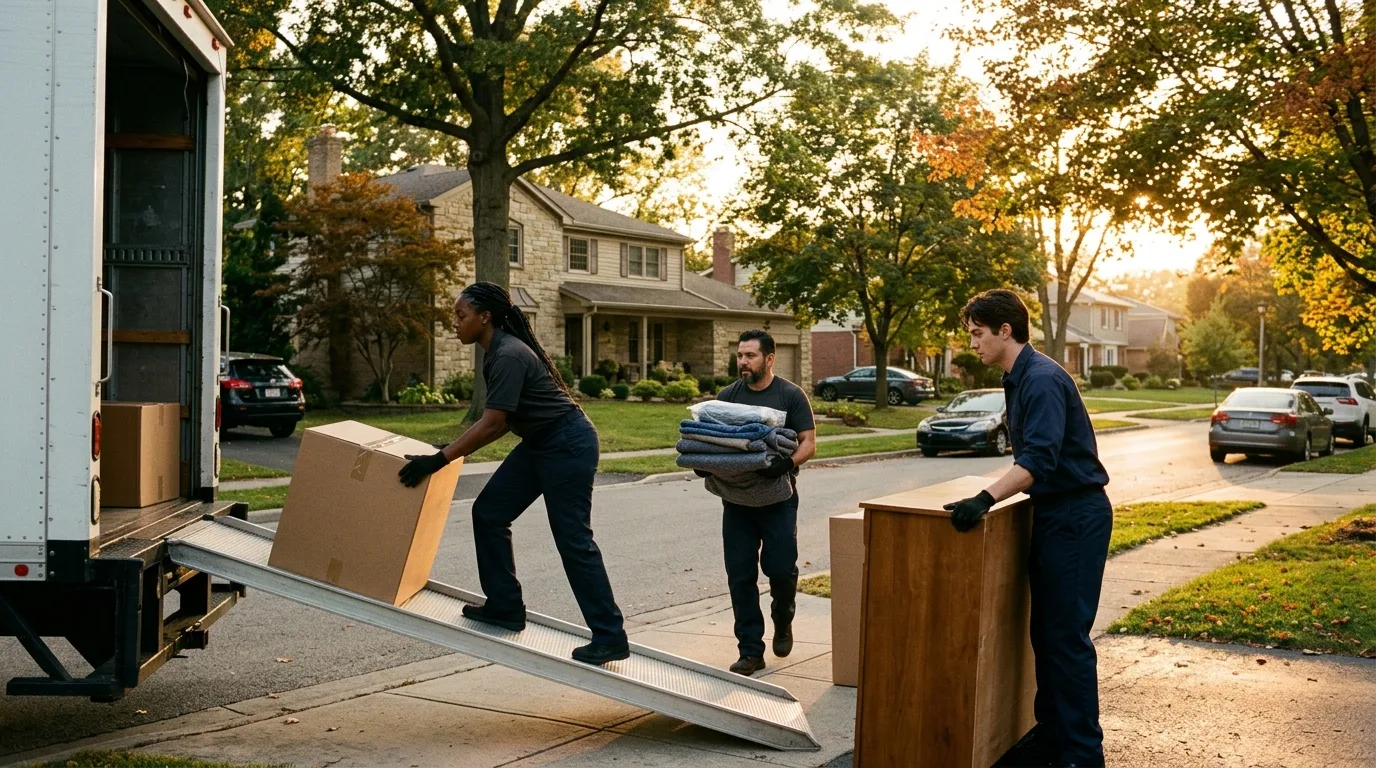
- Most rentals include a fold-out ramp; some larger trucks have a hydraulic lift gate instead, which helps with heavy appliances but may cost more

Comparing movers already?
See real, unedited reviews for the 10 biggest national van lines before you book.
How truck size affects moving cost
Rental price scales with truck size, but not as steeply as you might expect for a one-way interstate move — the mileage rate (charged per mile for a one-way rental) often matters more than the base daily rate once you're driving hundreds of miles. Fuel economy also drops noticeably at the largest sizes: a 26-foot truck typically gets 8-10 mpg versus 10-12 mpg for a 15-footer, which adds up over a long interstate trip. Compare this against full-service and container pricing in our moving cost calculator.
Truck size in cubic feet, not just length
Truck length is a rough shorthand — actual cargo volume is what determines what fits. A good rule of thumb is roughly 150-200 cubic feet of truck space per fully furnished room. (Source: Extra Space Storage) For reference, U-Haul's own specs put a 15-foot truck at about 764 cubic feet, a 20-footer at about 1,016 cubic feet, and a 26-footer at about 1,682 cubic feet. (Source: U-Haul) Penske's lineup runs similarly: a 16-foot truck at roughly 800 cubic feet with a 4,300 lb load capacity, a 22-footer at roughly 1,200 cubic feet with a 10,000 lb load capacity, and a 26-footer at roughly 1,700 cubic feet, also rated for 10,000 lbs. (Source: Penske) Exact numbers vary by rental company, so treat these as a general reference, not a guarantee for the specific truck you'll get.
Watch the weight limit, not just whether it fits
A truck can have plenty of empty space and still exceed its rated load capacity when you are hauling dense items. Books, tools, and weight equipment pack a surprising amount of mass into a small volume, so visual estimation often fails. Before you assume that 'it fits' means 'it is safe to drive,' check the truck's GVWR-based load capacity, which is the maximum weight the vehicle can legally and safely handle including the truck itself, fuel, passengers, and cargo. This distinction matters far more at the smaller end of the rental range. A 12-foot truck may be rated for only around 3,000-3,500 lbs of payload, meaning a few dozen boxes of hardcover books and a modest tool collection could push you right up against that ceiling without the cargo area ever looking full. The largest rentals, by contrast, typically carry a 10,000 lb capacity, which leaves ample margin for a full household move and makes overloading less likely in practice. Still, even with a big truck, dense loads deserve a quick weight check rather than eyeballing alone.
Get quotes for your move
Compare real mover reviews and get matched — free, no obligation.
Frequently asked questions
Most 2-bedroom apartments fit in a 15–17 foot truck. If you have a lot of furniture, a home office, or an extensive book/media collection, size up to a 20-footer to avoid a second trip.
Too big, within reason — an oversized truck costs more in rental fees and fuel, but an undersized truck means a second trip (more fuel, more time, more risk of items shifting in a half-empty load) or items left behind entirely. Most rental companies would rather you size up by one class if you're unsure.
Legally, yes in most states — a standard driver's license covers trucks up to 26,000 lbs GVWR, which includes most 26-foot rental trucks. That said, they drive very differently from a car: wider turns, longer stopping distance, and height restrictions (usually 12-13 feet) to watch for on the route.
Most rental trucks 15 feet and up include a fold-out ramp. Straight box trucks over 20 feet sometimes have a hydraulic lift gate instead, which is easier for heavy appliances but adds rental cost. Confirm which your specific rental has before moving day.