How to move a gun safe or other heavy item
Updated September 5, 2026
Gun safes, large appliances, and similarly heavy items (300 lbs and up) need real planning — the wrong approach risks serious injury and damage to floors, walls, and stairways, not just the item itself.
On this page
- Typical gun safe and heavy item weight ranges
- What equipment it takes to move something this heavy
- Always disclose a heavy item during your moving estimate
- When to hire specialists instead
- Step-by-step: moving a heavy safe with a dolly and ramp
- If there are firearms inside: what federal law actually protects
- Why "I can probably lift it" is the wrong test
- Frequently asked questions
Typical gun safe and heavy item weight ranges
- Small personal/pistol safe: 100–150 lbs
- Standard gun safe: 300–500 lbs
- Large or fireproof gun safe: 500–1,000+ lbs
- Full-size appliances (refrigerator, washer/dryer): 150–400 lbs each
- Home gym equipment, large weight sets: varies widely, often 200–600+ lbs total
Check your specific item's manufacturer specs if you are not sure — weight varies a lot within each category. A mid-size refrigerator and a compact model might both look like standard appliances, yet differ by a hundred pounds or more. Gun safes especially run the gamut from manageable two-hundred-pound cabinets to vault-style units exceeding a thousand pounds. Getting the actual number from the manual or a product sticker takes a few minutes and prevents miscommunication later.
What equipment it takes to move something this heavy
- A rated dolly or hand truck — standard dollies aren't built for 300+ lbs; use one specifically rated for the weight
- Moving straps to distribute weight and free up hands for balance and control
- A stair-climbing dolly or ramp system for any stairs — never attempt heavy items on stairs without proper equipment
- Plywood or floor protection to avoid gouging floors when sliding or rolling something this heavy
- Enough people — 3-4 minimum for anything over 500 lbs, more for stairs
Always disclose a heavy item during your moving estimate
Tell your mover about any extremely heavy item — a gun safe, large piece of home gym equipment, or similar — during the estimate, not on moving day. Some movers handle these as a standard bulky item with an added fee; others require advance notice to bring the right equipment or a specialized subcontractor. Surprising the crew with a 600-pound safe on moving day is a common source of delays, added costs, or a flat refusal to move it safely without the right setup. The estimator needs time to assess door widths, stair geometry, and whether a hoist or crane service might be necessary. Springing this information at the last minute also means the crew may not have scheduled enough hours for your job, which can throw off their entire route and leave you scrambling for alternatives.

Comparing movers already?
See real, unedited reviews for the 10 biggest national van lines before you book.
When to hire specialists instead
For anything over roughly 500 lbs, involving stairs, or requiring navigation through tight spaces, hiring movers with specific experience moving safes or heavy equipment is worth the cost — the risk of injury or property damage from a DIY attempt on something this heavy is real, not theoretical. A tipped safe can punch through a floor, destroy a staircase, or crush a hand or foot before anyone can react. Experienced crews bring appliance dollies rated for the load, stair-climbing equipment, and the practiced coordination that comes from having done this dozens of times. They also carry insurance structured for this kind of work, which matters when a single mistake can mean thousands in structural repairs or medical bills.
Step-by-step: moving a heavy safe with a dolly and ramp
- Empty the contents and lock the door so it can't swing open mid-move.
- Measure your doorways and path in advance, and clear obstacles out of the way before you start moving anything.
- Tilt and secure the item onto the dolly using rated straps — don't rely on balance alone.
- Wheel it slowly along the planned path, with one person guiding and at least one or two others stabilizing from the sides.
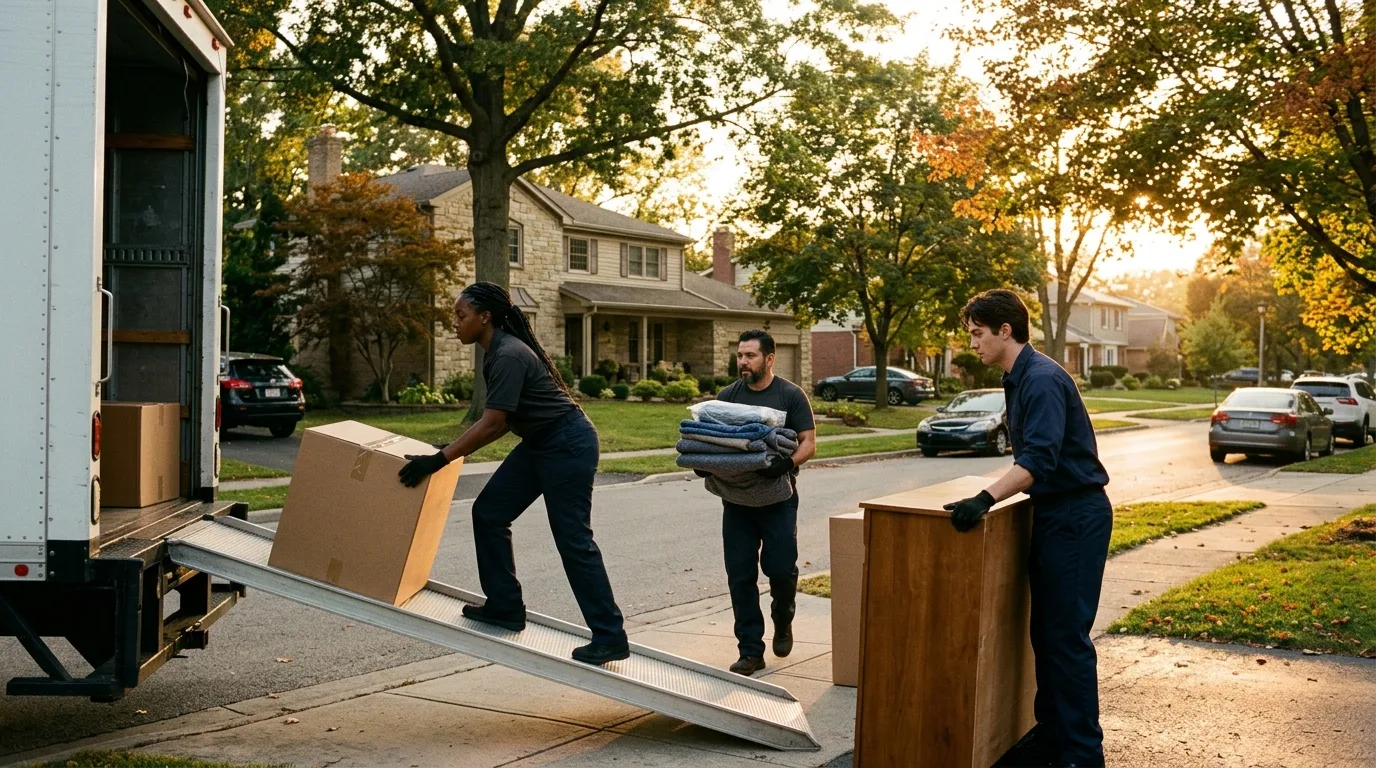
- Use a ramp for any steps — never attempt to lift a heavy safe or appliance up or down stairs by hand.
- Load it into the truck with a hydraulic lift gate if the truck has one, and confirm the lift gate is actually rated for the item's weight before using it.
(Source: MoveAdvisor)
If there are firearms inside: what federal law actually protects
A gun safe and the firearms inside it are two separate questions. Most movers require the safe to be emptied of firearms and ammunition before loading — but if you're transporting the guns yourself, across state lines, federal law protects that. Under 18 U.S.C. § 926A, part of the Firearm Owners Protection Act, anyone not otherwise prohibited from possessing a firearm may transport it between two places where they can lawfully possess it, regardless of state or local law along the route, as long as "the firearm is unloaded, and neither the firearm nor any ammunition being transported is readily accessible or is directly accessible from the passenger compartment" — and in a vehicle without a separate trunk, it must be in a locked container other than the glove box or console. (Source: 18 U.S.C. § 926A) This protects you personally driving the firearms — it doesn't obligate a commercial mover to accept a loaded safe or transport ammunition as cargo.
Why "I can probably lift it" is the wrong test
OSHA doesn't set a hard legal weight limit for one person lifting something manually, but the ergonomic standard behind its guidance — the NIOSH lifting equation — starts every calculation from a load constant of 51 lbs, the maximum weight considered safe to lift alone even under ideal conditions: close to the body, no twisting, a solid grip, and a short, controlled distance. A gun safe fails most of those conditions by design — it's bulky, hard to grip, and usually has to be tilted, walked, or carried down stairs. Once those real-world factors are applied, the safe solo-lift threshold for an item like this drops well below what most people assume they can handle. (Source: CDC/NIOSH) It's a big part of why the crew-size minimums above exist.
Get quotes for your move
Compare real mover reviews and get matched — free, no obligation.
Frequently asked questions
Small personal safes start around 100-150 lbs, but full-size gun safes commonly weigh 300-800 lbs, and large or fireproof models can exceed 1,000 lbs. Check the manufacturer's spec sheet if you're not sure — weight varies enormously by size and fire-rating.
It depends on the weight and your mover's equipment and policy — some full-service movers handle safes as a standard bulky item, others require advance notice or a specialized subcontractor for anything over a certain weight. Always disclose it during your estimate, not on moving day.
A stair-climbing hand truck or appliance dolly rated for the weight, moving straps, and — for the heaviest safes — a piece of plywood or a ramp system to distribute weight and protect flooring. Crew size scales with weight; anything over 500 lbs typically needs 3-4 people minimum.
No — stairs are where most heavy-item moving injuries happen. Never attempt a safe, large appliance, or similarly heavy item on stairs without at least one other person and, ideally, proper equipment (a stair-climbing dolly or professional help).