Moving with kids checklist
Updated September 5, 2026
An interstate move is a bigger disruption for kids than a local one — new school, new friends, often a longer stretch before things feel normal again. A little extra planning goes a long way.
On this page
- School records for an interstate move
- Preparing kids for a long-distance move
- Pack a personal moving-day bag for each child
- Helping kids settle in after the move
- How you explain the move matters
- Help them keep the friendships that matter
- Keep kids' personal documents together and accessible
- Stick to your kids' routine once you've arrived
- The law behind school records transfer
- Frequently asked questions
School records for an interstate move
- Request transcripts and enrollment records from the current school early — interstate transfers can take longer than in-state ones
- Gather immunization records, required for enrollment in the new state
- If applicable, get copies of any special education or individualized education plan (IEP) documentation, since these need to transfer with the student
Preparing kids for a long-distance move
- Tell kids about the move with enough lead time for them to process it — the right amount varies by age and by how the individual child handles change
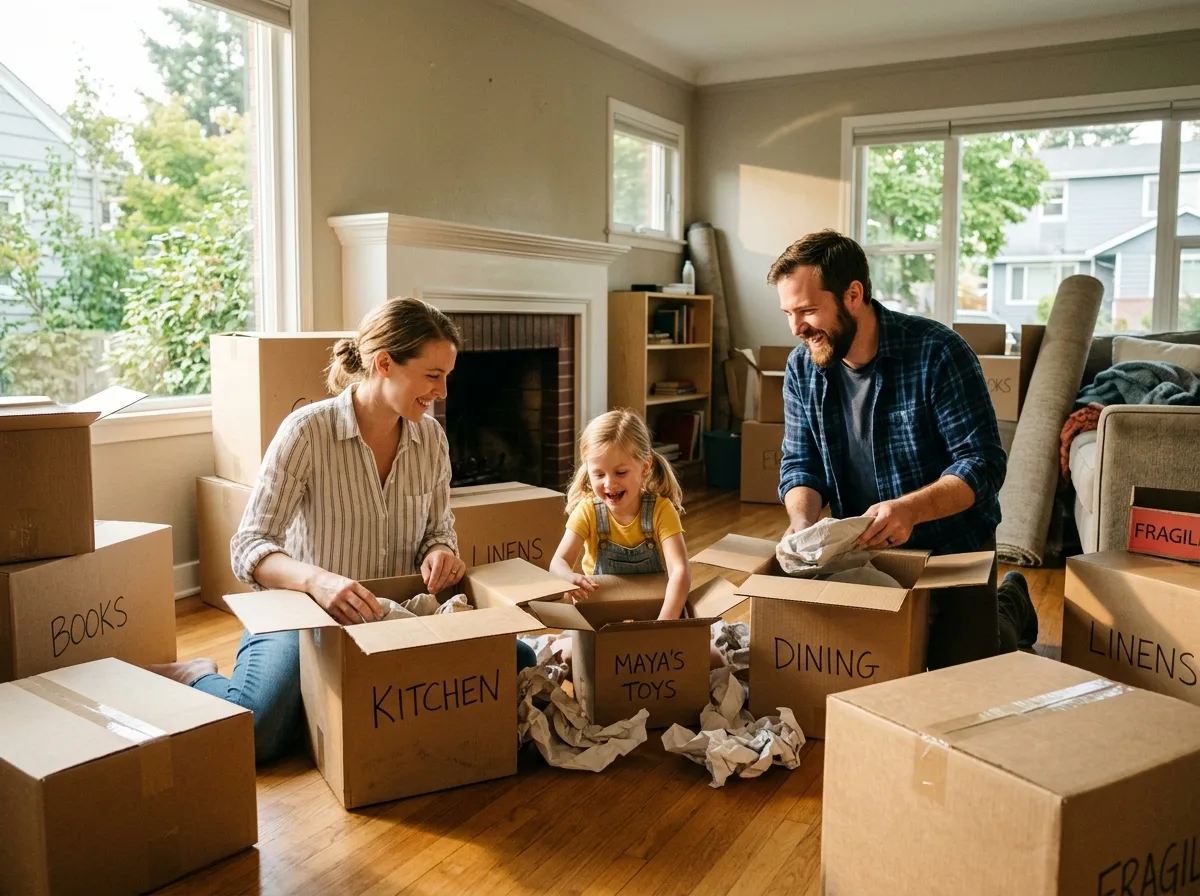
- Let them help pack their own room or choose what goes in a personal box — this gives some sense of control over the process
- If possible, show them photos or information about the new home, school, or area ahead of time
Pack a personal moving-day bag for each child
Pack a dedicated bag for each child with comfort items, favorite snacks, and whatever entertainment keeps them occupied during long stretches of downtime. Think about what they would genuinely miss if it were buried in a box on a moving truck for even a single day. Maybe that is a worn stuffed animal, a specific water bottle, or the tablet charger they rely on. Treat this bag the same way you would your own first-night essentials. Keep it with you in the car or carry-on, not loaded onto the moving truck where access becomes impossible until delivery.
Helping kids settle in after the move
Make setting up a child's bedroom one of your first priorities, even if the kitchen and living room are still full of stacked boxes. A familiar space with their own bedding, a few favorite toys, and clothes organized in drawers can anchor them when everything else feels chaotic. This single room matters more than nearly any other unpacking task during the first week. Children adjust faster when they have a predictable place to retreat, sleep, and play. The rest of the house can wait.
Stay ahead of your timeline
Get matched with movers now so your date is locked in, not left to the last minute.
How you explain the move matters
Be upfront and clear about why the move is happening, in terms that fit your child's age, rather than glossing over it or oversharing adult-level details. Giving a realistic timeline — when packing starts, when they'll leave their current school, when they'll start the new one — lets kids mentally prepare instead of being surprised by each step as it happens. (Source: Suddath)
Help them keep the friendships that matter
Losing daily contact with friends is often the hardest part of a move for kids. Before you leave, help them set up a concrete way to stay in touch — video calls, a shared photo album, even old-fashioned letters — so the friendship has a plan instead of just fading out. Showing them the new neighborhood, school, or area ahead of time through photos or video also gives them something familiar to picture instead of a blank unknown. (Source: Suddath)
Keep kids' personal documents together and accessible
Birth certificates, Social Security cards, medical records, and school transcripts are easy to lose track of during a move if they're scattered across different files or boxes. Keep them together — a fireproof lockbox is a reasonable option — and transport them with you rather than on the truck, the same way you'd handle your own important documents. (Source: Tralon Homes)
Stick to your kids' routine once you've arrived
Keeping mealtimes, bedtimes, and other familiar routines consistent in the first weeks at the new home gives kids a sense of stability even while everything around them is unfamiliar. Younger kids in particular tend to adjust better with predictability than with a schedule that's still in flux on top of a new house, school, and neighborhood. (Source: Tralon Homes)
The law behind school records transfer
The reason your child's transcripts and other records can move from one school to another without you filling out a separate release form each time is a federal law called FERPA (the Family Educational Rights and Privacy Act). It generally requires written consent before a school shares a student's education records — but it carves out a specific exception for transfers: a school can disclose records to another school where the student is enrolling or already enrolled, without consent, as long as the disclosure is related to that enrollment or transfer. (Source: U.S. Department of Education)
That exception is what makes interstate transfers workable without a lot of extra paperwork on your end, but it doesn't mean it happens instantly — the sending school still has to make a reasonable attempt to notify you that the records were disclosed, unless you or your child requested the transfer yourselves. Following up directly with both the old and new school is still worth doing, since a "reasonable attempt" at notification isn't the same as records actually arriving on the timeline you need them. (Source: U.S. Department of Education)

Get quotes for your move
Compare real mover reviews and get matched — free, no obligation.
Frequently asked questions
As early as is practical for your family's situation — more lead time generally helps kids process the change, though the right amount varies by age and how the child typically handles transitions.
Transcripts, immunization records, and any special education or individualized education plan (IEP) documentation are the most commonly needed — start this process early, since transfers between states can take longer than an in-state transfer.
For many kids, yes — having some control over packing their own room or choosing what goes in a personal box can make the move feel less like something happening to them.
A few comfort items, snacks, entertainment, and anything they'd be upset to be without for even a day — treat it the same way you'd treat your own essentials box, packed and kept separate from the truck.